Nothing lasts forever – even when it’s sponsored by Amazon.com

I discovered today that the Amazon Breakthrough Novel Award (ABNA) competition has been discontinued. This is disappointing, but judging from the comments in the ABNA forum, I’m not as heartbroken over it as some other would-be contestants are.

I have participated in ABNA since its inaugural year, which I believe was 2008. It was an annual event, allowing 10,000 novelists from around the world to compete for a healthy royalty advance and a publishing contract from Amazon, with all the marketing advantages that we 10,000 imagined that entailed. Based on the quiet death of the event, perhaps we were imagining too much.

I experienced varying degrees of success in my seven attempts at ABNA. I never won, but I never expected to. It was a great opportunity to get feedback from total strangers who were avid readers and reviewers. That was enough to make it worthwhile, especially since it was free to enter.

Sure, it was exciting to scan the list of entries moving ahead to the next round. It felt good to advance, and it was always deflating to be booted from the competition. Some took it hard, but most recovered fairly quickly. Just as for Cubs fans, there was always next year.

Except there is no next year now, because there’s no this year now. The announcement came just as people were expecting the new submission period to be announced. The unfortunate timing left many sorely disappointed.

Bad news coming

“What’s that? You’ve discontinued the Amazon Breakthrough Novel Award? How delightful!”

My disappointment is mild by comparison. Over the years, the ABNA highs got less high and the lows not as low for me. It became more of a yearly routine than a special event. It was a nice routine, like a free lottery ticket, and I’d take it when offered, but I had my chances so I can’t complain.

I do feel for the folks who discovered ABNA in the last year or two – those who learned from the experiences of their rookie seasons and were ready to come back at it with renewed vigor – those who toiled to rework their manuscripts specifically for this chance, only to discover at the final hour that the chance was no more. I wish they had time to come to see ABNA as just one of many opportunities before it got yanked away from them.

Amazon has replaced ABNA with its Kindle Scout program. I haven’t read many details about Scout because it only accepts three genres, in which I have no manuscripts ready. From the little I have read, it seems like a social media popularity contest more than anything else. I admit, there is some value in knowing which authors can rock social media, but it doesn’t seem to account for the quality of their work very much.
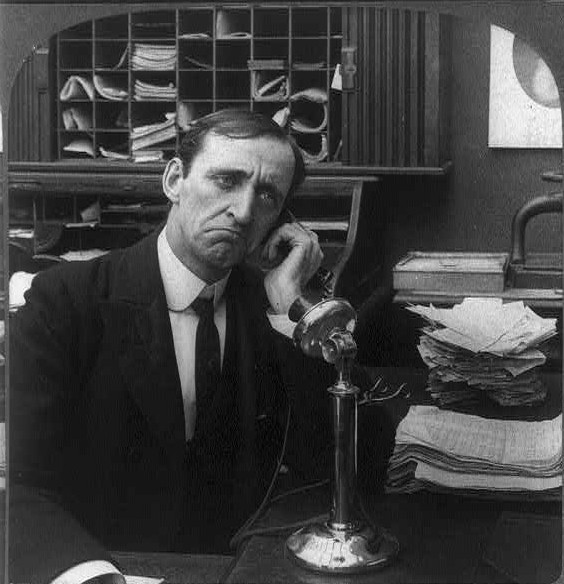
Bad news here

“And you’ve replaced it with a program that relies on social media? I’m absolutely giddy over it!”

Scout may turn out to be a good program. I don’t know enough about it, and it hasn’t had time to prove itself. Time will tell. Meanwhile, I bid a fond farewell to ABNA. I won’t cry, but right around this time every year, I will miss you, if only just a little bit.


Blurred lines: Stuck in limbo between Young Adult and General Fiction

When you are preparing to release a new novel to the public, it’s easy to become plagued by doubts.

Is the action exciting enough? Is there enough action? Is the dialogue compelling? Are the characters well-developed? Are they relatable? Will anybody care what happens to them?

This list goes on . . .

These transient type worries tend to replace each other day by day until you resign yourself to the fact that there is no ironclad way to dispel them. You will only get your answers once the book is in the hands of readers. Until then, you have to work largely on faith.

If you are extra fortunate, your book will also give you one good underlying concern that haunts the back of your mind throughout the process, even as your transient worries jockey for position at the front of your mind.

With A Housefly in Autumn, my super-duper awesome underlying concern has been hitting the right target audience.

I always envisioned A Housefly in Autumn as a Young Adult novel. It’s themes and tone were tailored to younger readers from the beginning, and from the beginning this categorization had the potential to be problematic.

There is a large cohort of literary-minded people who adhere to a rule about Young Adult fiction, mandating that the main character in such works must be no older than 18 throughout the story. I broke this law half way through the first draft. My main character ages out of this statute at about the 60% mark. Then, he does something even more illegal: he continues to age.

Accidents of youth

My main character, before he joined AARP and applied for a reverse mortgage. (Art by Jessie O’Brien)

I decided early on I would have to take my chances by breaking this popular maxim. I sailed full speed ahead.

Then, something else began to happen. As I started getting feedback on the manuscript, I realized that the things I was attempting with the narrative style and word choices were distracting readers from the story. I needed to adjust the tone.

In making the tone more conventional, I have sacrificed what to me is some of the youthful flavor of the narrative. This change was necessary but it was not done without some regret. The novel reads more like General Fiction than I intended.

Still, I could not see marketing it as General Fiction. The themes are too youth-oriented for that. Hence, my nagging concern: is this novel stuck in limbo between youth and adult fiction?

Maybe. But in this age of crossover and overlap, maybe limbo isn’t a land of the lost anymore. Maybe “youthful flavor” is a relic of a simpler time. Maybe youthful theme, coupled with a not overly youthful tone, is a budding sweet spot.

Pigeon-holing is still a useful concept in marketing, and leaning toward Young Adult is not exactly a clear-cut niche. Yet, it is just the spot where this book rests.

In the end, this dilemma will be resolved in the same way the “Will people like my characters?” question is. Readers will decide.

I’ll live with that.

Addition by subtraction: ditching the unhelpful words

I’m working my way through the third proof copy of A Housefly in Autumn and it’s making me remember why it took me four or five proof copies to get my other books ready.

I’m always searching for a tweak to make it a little better.

I haven’t noticed any embarrassing mistakes so far on this copy. I haven’t even come across anything that I feel is definitely an error. In spite of this, I have plenty of red pen marks on this third copy already, and I’m not half way through.

What am I marking up then?

Mostly, I’m striking words that seemed necessary at one time, but now just seem like extra words. They are not extra words of the James Fenimore Cooper magnitude. They don’t lead down dead end paths into inescapable thickets. At least in my opinion, they don’t. But they don’t add anything to the potential reader’s understanding of the story either.

An extra wordsmith

James Fenimore Cooper, a man of abundant imagination and even more abundant verbiage.

It’s amazing how many of these words pop up in a novel. And it’s amazing how many edits it takes to get most of them out.

I added a very short scene to beginning of the story prior to this proof. It didn’t change the themes of the tale, but it did slightly alter the tone in which it is narrated. This is the other major category of cross-outs this time around. There are some residual statements sprinkled throughout the book that reflect the previous tone too much. These need to be changed or removed. They are pretty easy to spot, but not always simple to fix.

At the end of this proof, I hope to have an efficient story with a smooth, consistent narrative tone from start to finish. Then I can move on to the really nit-picky stuff on proof number four. Maybe I’ll even have the luxury of revisiting issues I previously vacillated over before deciding. You have to flip a lot of coins in self-publishing. Sometimes you want to go back and flip them over again, not because that gives you a better decision, but it might make you feel like you put enough thought into it.

Meanwhile, I’m not giving up on finding errors. By now, I am the least qualified person to find any errors that remain. My jaded eyes have skipped them before, and they’ll skip them again. I’m counting on other pairs of eyes to bring me errors. I hope they do better than I could do right now, because the consequences of hard decisions I can live with; glaring mistakes are harder to stomach.

The saga goes on. It pains me that it takes so long. I’m disappointed to have missed a Christmas release. But if it makes the book a cleaner, better reading experience it will have been worth every dragged-out day of it.

What could be better than Mr. Magoo?

In my last post, I mentioned that I am reading A Christmas Carol to my son. I want him to know the original text. Here’s how I discovered the original.

I first stumbled across A Christmas Carol one January when I worked at a bookstore. Normally, mid-January is not the best time to read a Christmas tale, but for a retail worker, that is about the time when you finally are allowed to enjoy the Christmas season, so it was not an untimely find.

I found it among some unsold Christmas books, pulled from the shelves when their season passed. Having nothing better to do on my lunch hour, I began to read. I’d never read Dickens in school and I thought I had done well to avoid him. I’d known the plot of this story since toddlerhood, when Mr. Magoo performed it for me. I expected to find that this Dickens fellow had merely supplied a stiff, uninspired outline that Mr. Magoo had turned to gold with his top-of-the-line production values and his sterling acting ability.

I was mistaken. I found myself engrossed in an excellent story, beautifully told. Dickens did not bore me; he charmed me. If I had not loved this story until that point in my life, it was only because Mr. Magoo, and all the many Scrooges in film, had not done it justice. It was hard to think of old Magoo in this light, but the printed pages told the truth of the matter.

Scrooge Magoo

Even a genius of entertainment like Magoo couldn’t match the the magic of the original.

There is a reason why A Christmas Carol has endured for 170 years, and it is not because Mr. Magoo and Scrooge McDuck waste their valuable time remaking narrative duds. You can’t throw a cherry cordial in a department store without hitting a DVD knock-off version. I use knock-off glibly because even the best film versions are knock-offs compared to the original text. People out to make a quick buck repackaging an old product don’t pile onto a loser.

A Christmas Carol endures because it gets so many of the elements of story-telling right. The plot arc is a pristine bell curve of narrative art. There are no awkward outliers to skew the meaning, nor burrs of unresolved plot points. The narrative moves forward with purposeful strides through every scene.

The writing is colorful, witty, playful, and endearing. These are not words often associated with Victorian works, which is why the book surprised me so much. The greatness in the work is that the writing is also very powerful. Combining playful and powerful is a rare accomplishment in any era.

If a traditional plot arc is not your thing, A Christmas Carol may not be your favorite. I wouldn’t argue with that opinion, but I would suggest that any time you read a Christmas story about a character’s redemption, that character is probably a long-lost grandchild of Ebenezer Scrooge.