My novel outgrew its stretchy pants

Having written a novel too long for its own good is a situation relatable to many writers. The following is not intended as a “how to” essay. It is my plan to solve my own long book problem. I offer it as inspiration to keep chipping away at the good story within.

Diagnosis: Book Obesity

About a decade ago I finished writing a historical novel I thought had potential. Having potential is a characteristic of things that are not yet ready. As much as I liked the book, it was not what I wanted it to be. Something stood in the way of the potential I saw on the horizon, but I couldn’t tell what it was.

I put the book away and moved on to other projects.

A year ago, I got it out again and read through it. Maybe it’s a sign of me getting closer to reaching my potential, or maybe I’d just acquired the necessary distance, but a big problem jumped right out: the book was too long. In short, there were too many words.

A Surfeit of Words

Some books are too long because the plot can’t sustain the length, and some books are just too wordy. My book was an example of the latter.

I still liked the story, so I decided to do some work on it. I cut out unnecessary words, of which there were plenty, and rewrote scenes to streamline them. Instead of over-explaining the history, I let the characters reveal period points through their dialogue and actions.

I cut out about 10% of the words, improving the pacing, and smoothing the flow. Still, at nearly 500 pages, it remained a long book. The modern world does not embrace such behemoths. Some readers won’t touch them and even the publishing process is slanted against them.

Considering the length limitations of POD paperbacks, and the conflict between keeping the finished product’s price attractive to readers and still reaping some sort of royalty on sales, long books can spell trouble for Indie authors.

tree measuring

Measuring a likely tree to determine if it will yield enough paper for the proof copy.

Make a Long Story Longer?

Having rewritten huge portions, I struggled finding ideas to make the book shorter still. At the height of this struggle I was struck by inspiration: why not make the story longer? By making the story longer, I could turn one overweight book into two manageable books.

I realize this is not the answer for every long book, but my novel covers a span of years so it would be easier to divide it in two. This would allow me to turn my lemon of a long book into the lemonade everybody loves these days: a series.

Prognosis: The Surgeon is Cautiously Optimistic

Two books do not make an epic series, but it is a series. I’ve never written a series of any sort, so the prospect is exciting.

Of course, every solution brings its own problems. Now I have to tease this book apart without leaving wrong scenes in wrong books, while making both offspring self-sustaining. I also have to write some new scenes to balance the ends and ease the transition between books.

These issues are daunting. I may fail miserably. If I succeed, I’ll have a sequel ready when I publish the first book, and that seems like a nice position to be in. I’m going to give it a try. Wish me luck.


5 reasons why I don’t aspire to be a famous author

I used to be like that. I used to have fantastic dreams about my books becoming best sellers: Oprah told everybody how good I was; I made money hand over fist; I went on talk shows, and all the eyes staring at blinking cursors spent half their time hoping to emulate my success and half their time resenting it.

I’ve changed. The more I thought about it, the more I realized fame and fortune would be too much hassle. I’m content being a regular guy with a modest income. People leave me alone. Sure, my kids will have to collect 47 scholarships to be able to go to college, but it’s good to establish goals early.

Here are five reasons why I can’t be bothered to become a rich and famous author.

Paparazzi

I can’t have people chasing me around with cameras, waiting for me to do something embarrassing. They wouldn’t have long to wait. An individual as socially awkward as I am would become a feeding frenzy for the press. People forget all my gaffs because I’m just some random guy. They just shake their heads and walk away, and that’s how I like it.

Spain

All my new, hoity-toity friends would be constantly hounding me to go back to Spain again this year. “That little villa overlooking the Mediterranean you took last season was just so charming, you simply must rent it annually.” I’m used to driving to my vacations in a minivan. I don’t think there’s an interstate to Spain from here. Plus, “I’ll turn this private jet around right now!” rings hollow as a threat to bickering children.

Charming as all hell, but where do I park the minivan?

Mega-Signings

People lined up out the door, all of them wanting their books personalized, and the names people have today. I can’t spell any of them. They’d have to spell them out for me, and my penmanship is bad enough when I’m not distracted by trying to listen. At my little signings, there’s a short line and it moves fast, because everyone gets a book inscribed “To Jim”.

Impatient fans

Everybody would always be wanting to know, “When’s your next book coming out?” With all the mega-signings, Mediterranean vacations, and remembering not to pick my nose in public, when the hell do I have time to write a next book? As it is now, I have a much less stressful relationship with my public. By unspoken agreement, they don’t ask me when my next book is coming out and I don’t ask them if they bothered to read my last one.

Complacency

I’d get so wrapped up in carting my big royalty checks to the bank, I’d lose my fire and start writing lazy prose instead of sharp, insightful pieces like this one. I’d wear pajamas for a way-too-large segment of the day. Maybe I’d just do underwear. Not being distracted by constant trips to the bank, or Spain, and not having to worry about how to spell multi-syllable names, leaves me plenty of time to be thoughtful and stay hungry. For example, right now I’m thinking about how hungry I am. I bet the famous guys haven’t had gritty, real-world thoughts like that in years.

Fame? Who needs it?

If a novel had a baby would it be a short story?

A reader once asked me if I thought short stories were smaller versions of novels with fewer plot turns. It is a good question for writers to consider before transitioning from one form to the other. It’s helpful to remember the form you are writing and what its purpose is.

A short story is as much a mini novel as a chipmunk is a baby squirrel. They are completely different beasts, put on earth for different purposes. When a chipmunk grows into a squirrel, I’ll start writing short stories that are condensed novels.

I define a novel as a set of conflicts, illustrated through a series of plot turns, resolved in such a way as to leave the reader satisfied that some Wisdom was served by the narrative. This Wisdom may be love, justice, retribution, fate, or any other force in human experience that will lay the characters of the story down peaceably to rest.

This is a chipmunk. With any luck, it will grow into a bigger chipmunk and nothing else.

A short story should have one resounding point that will stick with the reader after the story is over. That point is revealed at the end of the story. Everything preceding builds the effect of that revelation.

Since the crux of a short story comes at the end, I often construct them backward. The ending is the kernel of the story, and everything leading up to that is set into place afterward, trailing back to the most natural starting point. Only what is necessary to bring forth the point is built into the story.

Novels demand to be conceived going forward. Even with a general idea of the ending, there will be too many shifting sands there for it to be the foundation. The characters have more say in the direction of a novel. They create the resolution as they travel the narrative, perhaps making the ending quite different than first imagined. Building a novel backward prevents the characters from developing into the people they should grow to be.

Short stories and novels demand different skills. Novels require more devotion to the characters, but they are more forgiving than short stories. A novel can survive a small lull in the narrative; a short story cannot. Each word carries more weight in a short story. A few ill-chosen words, or a few too many words, can quickly derail the narrative.

A squirrel, properly crafted and distinctly its own art form.

Short stories were once more popular than they are now. Their fall might be linked to the decline of literary magazines, but it may also have something to do with writers not appreciating how different the craft is from the art of writing novels.

Some short stories appear to have been aborted novels. Have you read stories that seem to come to a crashing halt, leaving you to wonder, “What was the point of that?” When I encounter one of these stories, I question if the writer set out to write a short novel, waiting to see where the story would take him. It took him nowhere, and he ran out of words.

Storytelling is about coming to a resolution or making a lasting point. The story written as a baby novel does neither. Infant novels labeled short stories are a turnoff. A chipmunk is bound to be a disappointment to his parents if his parents are squirrels.

Do you agree or disagree? Comments are open.

I Write Like . . .

There’s a web site called I Write Like that will analyze your writing, compare it to the styles of famous authors, and kick out the name of the author your sample most closely resembles. I have no idea if there is any science behind this analysis. The results should be taken with a grain of salt, but it’s fun to have the site suggest who you write like.

As an experiment, I entered the first few paragraphs of every story in A Smile Through a Tear into the analyzer. Then I entered the last few paragraphs. Here is a table of my results:

Story # Style of the first paragraphs Style of the last paragraphs
1 Cory Doctorow Stephen King
2 Lewis Carroll Cory Doctorow
3 H.P. Lovecraft Chuck Palahniuk
4 Stephen King Dan Brown
5 Margaret Mitchell Chuck Palahniuk
6 Stephen King Chuck Palahniuk
7 Margaret Atwood Dan Brown
8 Dan Brown Cory Doctorow
9 William Gibson David Foster Wallace
10 David Foster Wallace Dan Brown
11 Kurt Vonnegut Cory Doctorow
12 James Joyce Stephen King
13 Jack London Arthur C. Clarke
14 David Foster Wallace H.P. Lovecraft
15 H.G. Wells Jack London
16 Ian Fleming Stephen King
17 James Joyce Bram Stoker


According to the analyzer, I didn’t finish a single story in the style I began it. In some cases, this is not surprising. H.G. Wells’ style might not be all that different from Jack London’s. I can imagine some others on the list having similar styles.

But what’s with this Margaret Mitchell to Chuck Palahniuk transition? According to the analyzer, I’m going from Gone With the Wind to Fight Club in the space of about 6,000 words. I don’t remember writing any scenes where the dashing rake tells the heroine he doesn’t give a damn, and then they start pounding the hell out each other because it feels so good.

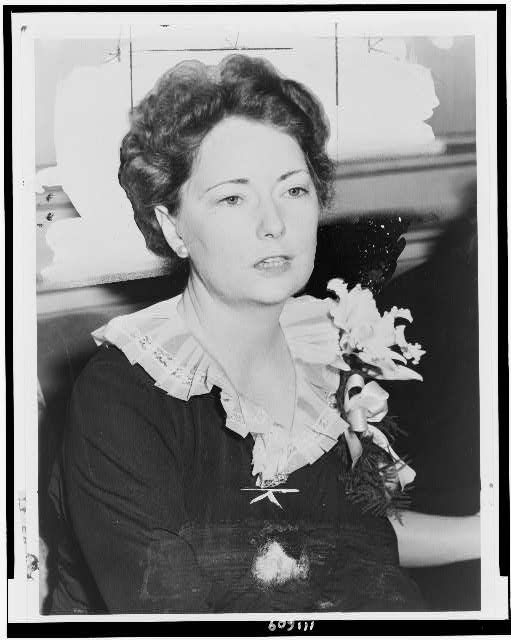
It's an honor, and also a stretch, for me to be compared to Margaret Mitchell.

It’s an honor, and also a stretch, for me to be compared to Margaret Mitchell.

Then I have an H.P. Lovecraft that turns into a Chuck Palahniuk. This must be the one where the protagonist examines the grotto underneath his family mansion because of all the rat noises, only to find a barroom basement where a bunch of guys are pounding the hell out each other because it feels so good. (I’m basing these Fight Club references on the movie, since I haven’t read the book.)

There’s another curious story that begins like Jack London and ends like Arthur C. Clarke. That’s the one where a sled dog befriends a self-aware robot during the Alaska Gold Rush. It’s a touching story until they have to build a fire to stay alive, only to discover that neither has any matches. (Dogs don’t have pockets and robots don’t smoke.)

Another interesting thing about this little exercise: none of my literary idols appears on the list. No one who should have molded the way I write is there. I have not read a word of some of the writers on the list. The one I’ve read most would probably be Stephen King, and I haven’t read more than three of his books.

I’m happy with the list. There are some well-respected authors on it. Besides that, I always intended A Smile Through a Tear as a collection of stories of great variety. I would say there’s some variety in the gulf between James Joyce and Dan Brown. So maybe I accomplished that mission.

Go ahead, give the analyzer a try. If you get any interesting results, feel free to tell us about them in the comments.