Moby Dick – Part I: Somebody should make a story out of this

Having had my mental energy usurped by a recent upswing in the intensity of my day job, it seems the perfect time to reintroduce my critique of Moby Dick from my former web site. It is a two-parter; the first part is impressions of the first half of the book. The second part was written after finishing the novel.

Part I: Half way through Moby Dick

I found a free Kindle version of Moby Dick. Since I am a sucker for finding out what’s going on with the classics, this was a clear incentive to give it a try. I should make it plain that I am only half-way through at present.

Most people think Moby Dick is a long book, but it is actually three long books. The first is a whaling primer, complete with whale classifications, history, and even a couple of chapters on how whaling is depicted in the fine arts. The second book is a defense of the occupation against other mariners, and general society, who may be inclined to look down upon the whaling trade. The third, and smallest, book is a novel, generally touching upon the subject of whaling.

There may be an audience for each of these three books. Unfortunately, the books are all mixed up, hodgepodge, into one. At the beginning of each chapter, the reader takes a spoonful of whale-product pot luck without knowing into which of the three books he is delving.

Three books in one, what a bargain!

Three books in one, what a bargain!

It is common among pieces of 19th century literature to meander into unfortunate asides that interrupt the narrative. Consequently, I am willing to give some leeway on this point. But Melville takes the inch I give and turns it into a mile, educating me on many topics about which I would just as soon remain ignorant, if I could save an hour by doing so. He spent a chapter explaining what’s wrong with the color white.

The storytelling itself (when it can be unearthed) suffers from a major point-of-view problem that would brand any modern author an untutored novice. Moby Dick is narrated by Ishmael, one of the crew of the ship. It does not take long for Ishmael to flee his own skin and flit about as a fly on the wall in places where his body is not present. The narrator describes scenes that Ishmael is in no position to see. Heartened by this omnipotent superpower, the narrator jumps into the heads of Ahab and his three ship’s officers to give us a glimpse of their most intimate thoughts.

You may be asking yourself, “Why has this dolt kept reading, if he finds so many problems with this book?” The answer is that there is one truly bright spot I hope will blossom in the second half.

In the actual narrative portions, when the story is really being told from the first-person, the prose is rather engaging. Melville’s style can be quite charming, as it was for almost three chapters in a row, in between sessions of Whaling 101 class. I’m hoping the last half of the book contains more of this type storytelling and less instruction and thought-reading.

I will continue reading, hoping that Ishmael is satisfied I’m now trained to competently follow the story of a fictitious whaling expedition. If I can also satisfy him that I want a chronicler of events as he experiences them, rather than a mind reader who presents me with every character’s thoughts, we may just be able to get along until the end.

It depends on your definition of Horror

I haven’t written about my Work In Progress in a while. And since I’ve got some time to kill while I wait for my last book to become a Best Seller, this might be a good time for an update.

My WIP is a collection of three novellas. It’s probably more accurate to call them two novelettes and a novella, but that takes more words to say, and who’s counting anyway? The genre is horror, kind of. It’s more psychological horror than anything revolving around chain saws and slack-jawed yokels. There’s really not much bloodshed in it at all, which is why I put the “kind of” after horror. I might call the novellas psychological thrillers, except I always think of spies or mobsters when I think psychological thriller, and there are neither of those, so I’m back to horror, kind of.

Poe. Not really his style of horror story.

Not really Poe’s style of horror story.

Then again, genre confusion is nothing new for me.

Whatever they are, I’ve finished the first drafts of all of them.

Yay!

Okay, party’s over; let’s get serious.

I had my first chance to read through them.

The two shorter pieces are entertaining, I think. They are not earth-shattering additions to the genre, whichever genre they happen to be, but I can see readers enjoying them as quick reads.

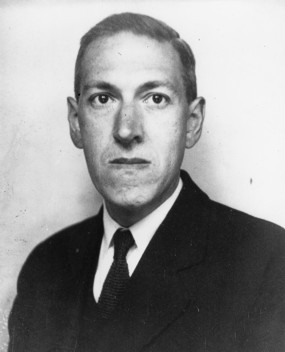
Definitely not Lovecraft's kind of horror.

Definitely not Lovecraft’s kind of horror story.

When it comes to the longer story, the feature presentation, if you will, I feel as if I’ve provided myself with good news and bad news. The good news is there are parts I think are quite good. The bad news is good parts are not enough to make a good story.

It’s not that the story is bad. It’s not, but as is, it’s not good enough.

What’s wrong with it? Well, for one thing, it’s probably too confusing. Confusing your readers is never good, unless you are an established post-modernist or something like that. In that case, confusing everyone just makes you a greater genius.

But I am neither a post-modernist nor a genius. At best, I am an adventuresome writer, playing with supernatural subject matter for the first time, and I may have gotten the Play-Doh colors all mixed up.

More in line with du Maurier's type of horror . . . but not really.

More in line with du Maurier’s type of horror story . . . but not really.

The fun thing in writing about unknown forces is that you get to make your own rules for what’s possible. Nothing is bound by the laws of physics we know. The trouble can be in remembering your new rules and applying them consistently. Plus, you’ve got to let the reader know the rules; they can be difficult to convey, without explicitly explaining them, when they are counter-intuitive to commonly known laws of nature.

Can this book be saved? I don’t know. I may be going too hard on myself, or too easy. I’ll have to get a second opinion, and then a few more after that.

All I know for sure is that I won’t even consider publishing it until I’m confident it’s a good quality, entertaining book, all the way through. How I get there from here will be my own horror story.

Author, Publisher, Promoter, Exporter . . . Exporter?

Since I last wrote about Goodreads giveaways I’ve opened my giveaways up to more countries besides the U.S. This worked fine when the winner lived in Canada, but after trying to get a book to South Africa, I think I’ve hit my limit.

The shipment to Canada I mailed myself. It cost more than I’d expected but it was easy. In the South African case, it would be less expensive to send a copy directly from Amazon.com to the winner.

Shipping cost $14, on top of the price of the book. I was pleasantly surprised at how reasonable this was, and that’s when the surprises stopped being pleasant.

During the ordering process I learned that South African customs requires the national ID number of the recipient of a package. I suspected the recipient could provide this number to customs when the package arrived there, but I wasn’t sure. Not wanting to ship a book that might never get to its destination, I paused to investigate.

Online searches yielded no helpful information.

Since Amazon had alerted me to the requirement, I decided to ask them about the particulars. I called customer support. The representative assured me all I need was the recipient’s address. Great. I asked him why Amazon requested the recipient’s national ID number in that case. He put me on hold. A minute later, he returned with a changed mind: I certainly needed the ID number to ship the package. I decided to try a different Amazon representative.

Via web chat, the next rep told me I could substitute my own national ID number. The only national ID number I have is my Social Security number, and I’m certainly not plugging that into Amazon to buy a book. Besides, it’s hard to see how my Social Security number would do South African customs any good. I hope they don’t have a database of all American’s and their most personal information. When I asked the rep about this, she began answering questions I had not asked, but not the ones I did. I said thank you and goodbye.

The humble, little humor novel that caused all the trouble. According to Amazon's shipping department, it might just be explosively hilarious.

The humble, little humor novel that caused all the trouble. According to Amazon’s shipping department, it might just be explosively hilarious.

Still confused, I broke down and did the unthinkable. I sent a message through Goodreads to the winner of my giveaway. Goodreads strongly discourages this, but under the circumstances, I hope to be forgiven.

The winner was a very nice man, who even apologized for his country’s red tape. Though I’d been careful not to ask for his ID number, he offered it anyway, along with a more specific address than the one supplied by Goodreads. I returned to my Amazon shopping cart. Problem solved.

Or not.

Amazon would not ship to the new address at all. A pop-up box explained that I might be sending something that South African authorities would not allow – for example, weapons or explosives. Well, I have handled hundreds of copies of this book, and it has never yet exploded. What the pop-up box didn’t mention is that the new address contained the phrase “PO Box,” which is more likely the reason Amazon didn’t want to deal with it. But it was convenient to blame it on the South African authorities.

I went back to the non-PO Box, address. Combined with the winner’s national ID number, no warning lights flashed and no gates came crashing down. I was free, as far as I know, to ship a humble, non-toxic, non-invasive, paperback book to South Africa.

What do you guess the odds are of it making it to its destination?

Why I stopped submitting short fiction to literary journals

When I first got serious about sending short fiction to literary magazines, I didn’t realize the difference between getting a story accepted and actually having the story published. Those were callow days.

Before electronic submissions, you printed a copy of your story for each prospective journal. Each copy needed a cover letter. You had to remember to change the journal name on each letter and put the right letter into the right envelope if you didn’t want to embarrass yourself.

Each mailing contained a stamped, self-addressed envelope (SASE) for the reply letter. You carted off your stack to the post office. If you were productive, the trip could be expensive.

It felt good to get a bundle of stories out. That feeling faded as the waiting game began. Still, walking to the mailbox every day held a little extra drama. There was always a journal that responded quickly, with words that meant: we didn’t bother to read your story; nonetheless, we’re sure we didn’t like it.

Over time, the rejections trickled in. They were terse, rarely requiring a full sheet of paper. Some editors scribbled a note in the margin to make it seem more personal, but rejection was rejection. NO was enough.

I began expecting all SASEs in my mailbox to contain rejections. One day I was opening a rejection when the strangest thing happened: I couldn’t find the word NO. The letter said Yes, as in, Yes, we would like to publish your story. It wasn’t a famous magazine, but few literary journals are. I put the letter on the refrigerator to show the world (or the part of it that passed through my kitchen) my success.

I knew it would take several months for the publication of the story, but it would be worth the wait.

I waited, and waited, and waited.

After several months, I emailed the editor. I got no reply.

I sent emails to everyone associated with the journal. Finally, someone replied. The magazine didn’t exist anymore. The non-profit publisher ran out of money. They wouldn’t be publishing my story, no longer having a vehicle for publishing stories.

This disappointment was superseded by other events . I got another story accepted and published by the first journal to which I sent it. They worked quickly and did an excellent job with the presentation.

Then I got a story accepted by the journal of a well-respected university – a name everybody would recognize. The story was published in a timely manner, but the presentation made me hesitant to hand out copies to everyone I knew.

They’d requested an electronic copy. When they converted it to a different format, some punctuation appeared as random symbols. They didn’t catch this, and it was printed with the odd symbols.

Soon after, a story was accepted by another university journal. It wasn’t a big name, but I was still happy to celebrate any success. That story has never been published. It never will be. I can’t tell what happened to that journal. It just sort of disappeared.

I don’t submit to journals anymore. Not because of the uncertainty or the disappointment. I stopped because of the modern ease of self-publishing. In 2011, I gathered my best short fiction: stories published in literary journals; stories accepted but never published; stories never accepted; and stories never submitted. I put them together and self-published the book: A Smile Through a Tear.

The roller coaster ride of journal submission eventually led to this.

The roller coaster ride of journal submission eventually led to this.

It was a great experience. I controlled the content, the timeline, and the appearance. It’s a modest endeavor, but it’s all mine. I hope to add many more books to my little self-publishing catalog. But if my projects fail, at least I won’t have to wait months for somebody to tell me about it.