You have been culled

When it comes to book authorship, the stat that matters is sales. There are lots of other stats you can follow, but they don’t mean much if they don’t result in sales. Most of the stats you can watch don’t result in sales.

If you are an Indie/self-published author, and you don’t have lots of time or money to spend on promotion, you might not see much movement in your sales numbers.

There are many reason why you may not have time for promotion: you work a day job; you have multiple family obligations (e.g. children); you need your limited spare time to write more books.

Likewise, there are good reasons you may lack funds for promotion: your day job doesn’t pay well; your family obligations outgrow their shoes every three months; Uber passengers complained because you were typing at a keyboard while you’re driving in your spare time.

Sorry children. Daddy bought a banner ad instead. You’ll just have share the one pair until the sales start rolling in.

Everyone has their crosses to bear, and anemic book sales is one of yours. Compared to keeping your family obligations healthy and in fitting shoes, it’s not even a heavy one.

But it’s the reason you bother to look at other statistics.

Other statistics are less important, but they’re probably more interesting than the drying wall of paint that is your sales total. They can keep you engaged in your own writing career (using career loosely) until that future day when you actually develop a writing career.

Goodreads offers a full menu of ancillary stats. These stats don’t mean much in terms of charting success, but an author can move them without a huge investment of time or money.

It’s kind of an illusion to make you feel better.

If it makes you feel better, it’s a useful illusion.

The easiest feel-good illusion to create on Goodreads is the “to read” line. You can bump this by giving away a single book. When people enter the giveaway, a percentage of them neglect to uncheck the box that puts the book on their “to read” shelf, making it appear as if new readers are getting ready to read your book.

Like all temporary stupors, this Giveaway buzz comes with a hangover. Periodically, Goodreads readers realize their own mortalities, and that no one is likely to read 250,000 books in one lifetime. They turn to their “to read” lists and weed out some of the whims and un-won freebies. This is your book. You have been culled.

Being culled is somewhere below spilled milk on the list of things to cry over. Yes, a number related to your book has gone down, which isn’t good, but it’s a fantasy number. “To read” numbers rarely translate into “currently reading” numbers, which is the only stat in the same neighborhood as sales.

There is no shame in being culled. It means there was a person who at one time was willing to accept your book if it were totally free and delivered directly to their home, and that’s a start. That person has moved on, and so should you, because it’s time to take your family obligations shopping for shoes again.

 

Clinging to life in the Goodreads Emergency Room

I’m haunted by this recurring vision in which I have a sudden crisis. I am rushed to the hospital and hooked up to all the most sophisticated machinery. As the doctor hovers over me and shines a light into my glassy pupils, the nurse hooks up the monitor, displaying all my vital statistics, as found on my Goodreads Author Dashboard.

The nurse starts reading important stats for the doctor to consider. “His average rating is stable at 4.29, but it’s based on only 21 ratings.”

“How many reviews?” the doctor asks.

The nursed scans the screen. “Seven.”

The doctor sighs. “That explains why I’m seeing signs of a collapsed ego.”

“It gets worse,” the nurse explains. “There are four books showing, but they only show up 1200 times on ‘to read’ shelves.”

The doctor shakes his head. “That’s only 300 per book. It’s a miracle he’s still writing.”

The nurse gasps as she continues reading. “Oh my goodness! There’s only one ‘currently reading’.”

“For each book?” the doctor asks.

“One, total,” the nurse replies, stifling the instinct to cover her mouth with her hand. “He’s hanging on by a thread.”

The doctor wipes sweat from his brow. “This is serious. Please tell me he has a few followers.”

“Yes, 37,” the nurse replies, trying to sound up-beat.

“That’s not good,” the doctor laments, “but I’ve seen worse. Is there anything we can use to jump start his writing career?”

“Well, he’s got quite a number of blog posts, but not too many people read them, maybe one view per post.”

“We’re going to have to do something to get his numbers up before his ambition flatlines. Set up some Giveaways, STAT! Let’s start with three and see where that gets us. Then I want him in some groups. Maybe we can get him interacting with people, if it’s not too late. If we can’t get his numbers up, he has no chance of becoming relevant.”

Later, the doctor greets my loved ones in the waiting room. “His writing career is not out of danger,” he tells them. “The good news is we were able to raise his average rating slightly, to 4.32. Also, we got his ‘to read’ shelf appearances up over 1300 and his followers to 39. These still aren’t great numbers, but, as far as his writing career goes, it’s a step in the right direction.”

“Doctor, I have just one question,” my wife says.

The doctor leans forward, showing a large, empathetic ear. “What is it?”

“Why do you keep making air quotes with your fingers every time you mention his writing career?”

If a novel had a baby would it be a short story?

A reader once asked me if I thought short stories were smaller versions of novels with fewer plot turns. It is a good question for writers to consider before transitioning from one form to the other. It’s helpful to remember the form you are writing and what its purpose is.

A short story is as much a mini novel as a chipmunk is a baby squirrel. They are completely different beasts, put on earth for different purposes. When a chipmunk grows into a squirrel, I’ll start writing short stories that are condensed novels.

I define a novel as a set of conflicts, illustrated through a series of plot turns, resolved in such a way as to leave the reader satisfied that some Wisdom was served by the narrative. This Wisdom may be love, justice, retribution, fate, or any other force in human experience that will lay the characters of the story down peaceably to rest.

This is a chipmunk. With any luck, it will grow into a bigger chipmunk and nothing else.

A short story should have one resounding point that will stick with the reader after the story is over. That point is revealed at the end of the story. Everything preceding builds the effect of that revelation.

Since the crux of a short story comes at the end, I often construct them backward. The ending is the kernel of the story, and everything leading up to that is set into place afterward, trailing back to the most natural starting point. Only what is necessary to bring forth the point is built into the story.

Novels demand to be conceived going forward. Even with a general idea of the ending, there will be too many shifting sands there for it to be the foundation. The characters have more say in the direction of a novel. They create the resolution as they travel the narrative, perhaps making the ending quite different than first imagined. Building a novel backward prevents the characters from developing into the people they should grow to be.

Short stories and novels demand different skills. Novels require more devotion to the characters, but they are more forgiving than short stories. A novel can survive a small lull in the narrative; a short story cannot. Each word carries more weight in a short story. A few ill-chosen words, or a few too many words, can quickly derail the narrative.

A squirrel, properly crafted and distinctly its own art form.

Short stories were once more popular than they are now. Their fall might be linked to the decline of literary magazines, but it may also have something to do with writers not appreciating how different the craft is from the art of writing novels.

Some short stories appear to have been aborted novels. Have you read stories that seem to come to a crashing halt, leaving you to wonder, “What was the point of that?” When I encounter one of these stories, I question if the writer set out to write a short novel, waiting to see where the story would take him. It took him nowhere, and he ran out of words.

Storytelling is about coming to a resolution or making a lasting point. The story written as a baby novel does neither. Infant novels labeled short stories are a turnoff. A chipmunk is bound to be a disappointment to his parents if his parents are squirrels.

Do you agree or disagree? Comments are open.

Paper Quarter – Flash fiction

If they wouldn’t come to him, he’d go to them.

Sneaking out of the home wasn’t difficult once you worked up the courage to try it.

There was bus stop down the street. Harold had never ridden the bus before, but he couldn’t think of another way. When the bus stopped, he climbed on. “How much is it to ride?” he asked the driver.

“For seniors it’s 75 cents,” the driver said.

Harold dug into his pocket. He had a $1 bill and two quarters. He handed the driver the bill.

The driver pointed to a slot in the post next to him. “You put bills in there.”

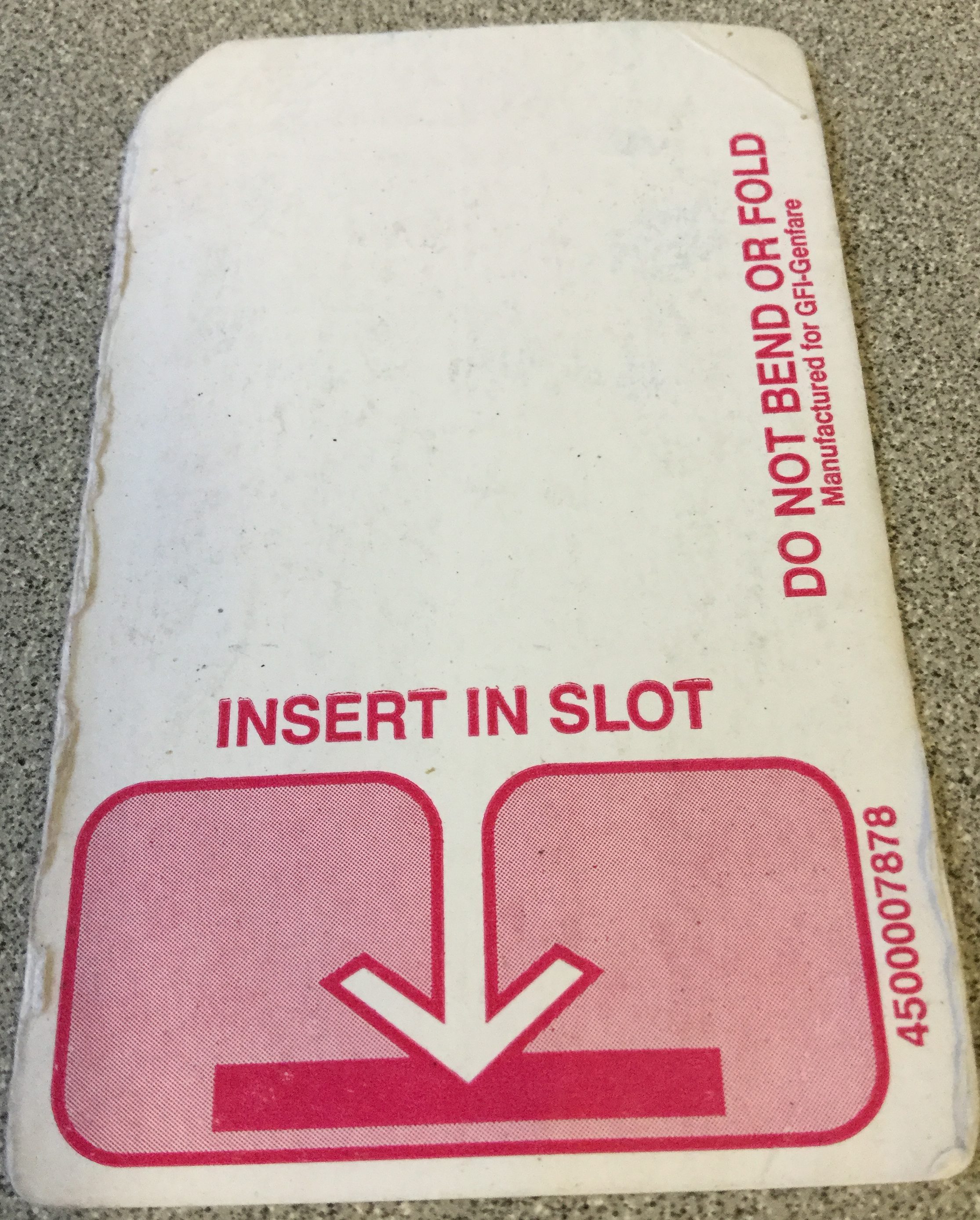
Harold fed the dollar into the slot. A paper card popped out of the post. “How do I get my change?” he asked.

The driver handed him the paper card.

Harold knit his brow. “This is a quarter?”

“It’s good for 25 cents toward your next ride,” the driver explained.

“Oh.” It seemed like they were into him for a quarter now, but the driver looked impatient so Harold didn’t complain.  He put the card into his pocket with his two real quarters. The bus jolted ahead. He fell into an empty seat.

Riders pulled the overhead cord when they wanted the bus to stop. Harold wanted Lexington Avenue, but didn’t know what stop preceded it. Nervous, he pulled the cord too soon. It wasn’t the right stop, but everyone saw him pull the cord. He got off and walked the extra blocks.

He climbed the steps of the porch and put his finger on the doorbell. He didn’t push the button.

This was a mistake. Their first thoughts would be to take him back. Sharon wouldn’t see her father; she’d see an escapee. It would be harder to sneak out again.

Why did he even come here?

Through the front window Harold noticed movement.  Leaning against the window frame, he peered in.

Joey sat on the carpet, playing with his trucks in the sunshine. Harold leaned and grinned as the boy tottered around on the floor, lost in his own imagination.

The toddler looked up, finding the face in the window. Harold smiled and waved. Joey waved back.

“I love you, Joey,” Harold mouthed.

Joey’s eyes lit up. “I love you, Grampa!”

Joey jumped up and ran deeper into the house, yelling to his parents that Grampa was here. Harold shuffled down the steps and hurried away. Fortunately, nobody believed children or old people.

Entering the bus, Harold slid his paper quarter into the slot. He dropped his two real quarters into the well. As they clinked onto other quarters, he found a seat.

It was satisfying to hear the clink of real quarters, and to get rid of the fake quarter they’d saddled him with. He had no more money, but at least nobody was into him for 25 cents anymore. He’d sneak back into his room with everything square, confident he’d gotten his money’s worth from the trip.