A book in the hand is worth four waiting for edits

The last time I wrote a post here about my writing projects, and I’m ashamed to say how long ago that was, I wrote about a four-book series in which I was knee-deep at the time. The good news is that I finished writing that series. The bad news is all the post-writing difficulties. Professional editing alone represents a prohibitive cost to the production of the set. And that’s just one of the things that needs to happen to the adolescent manuscripts before they can grow up to be big, strong books.

While considering how to embark upon that transition (i.e. banging my head against a wall), I have not been completely idle in other areas, except for blogging, in which pursuit I have been near completely idle. While I have not been blogging, or producing a marketable series, I have been working on this:
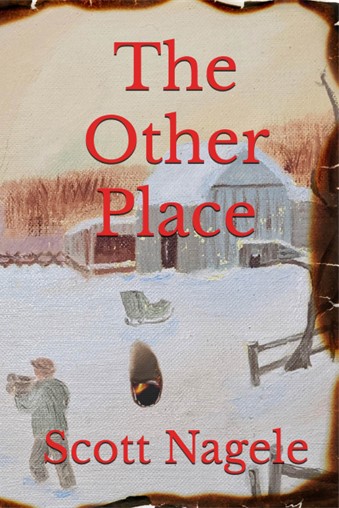
Granted, it’s not a series. It’s just a solitary novel. But on the plus side, it has been professionally edited. More to its credit, it has a cover, front and back. It’s even formatted in an easily-readable fashion. It may be a little thing (compared to a multi-book saga), but it’s very nearly done. That is to say, it’s almost an actual book, the kind people could buy and read if the fancy so struck them. And as Hans Christian Andersen was wont to say, “That is certainly something.” (Disclaimer: I don’t really know what Hans said in Danish; but the English translations usually amount to the quote above.)

If I click all the right buttons on the right web pages, this book will be released in May, 2023. If I don’t, it’s off to remedial button-clicking class for me. Anyway, enough about my technology issues, here’s the marketing blurb.

Emma and her parents share recurring dreams, in which they are a different family, living 100 years ago in an unfamiliar place, and heading toward tragedy. When Emma’s parents discover their dream family actually existed, it becomes clear that these visits to the past are more than mere dreams—they are playing an unseen role in this historical family’s lives. As the century-old history of this troubled family materializes, it reveals the truth that the impending tragedy spells doom for both families. Only five-year-old Emma has the power to avert disaster, but it will require extraordinary courage against overwhelming evil for Emma to save both families from destruction in The Other Place.

I will post more updates about this book through its publication. In theory, this will serve the dual purposes of building awareness about the book and making me back into the sort of active blogger I used to be. It may also give me something better to do than bang my head against the wall trying to discover a way to manage the production of four hefty novels in succession. That would be the icing on the cake, but a good cake without any icing would be enough for me right now.
The Series Saga: one book, two books, three books, four

It’s been two years since I posted my first update on what I’ve come to call the Series Saga. At the time of that first update, I’d already been working on the project for more than a year. Now, three years in, I hope I’ve reached the halfway point, but I really don’t know. It’ll take as long as it takes, I guess.

The Series Saga, for those who haven’t been following along, or those who forgot since my last update, 11 months ago, is my quest to turn one over-long novel into a series of novels in a major writing construction project.

READ THE SAGA FROM THE BEGINNING here

As of my last update, the series stood at three books. For reasons I enumerated at the time, I hoped it would not grow to four books.

A lot can change in 11 months. I went from hoping against a fourth book to seeing the need for a fourth book to accepting the fact of a fourth book to writing a fourth book.

I am now slightly more than halfway through writing the draft of the fourth book, which is actually the third book in the series. The chronological fourth book was the first book written. All this jiggery-pokery is explained in the earlier updates (sort of).

The good news is I’m confident I can close all the gaps with this fourth book (a.k.a. book 3) between the third book and the first book, which are actually books 2 and 4 in the storyline. In case you are marking your scorecard at home, this means the second book written is book 1 in the series.

Simple really.

“Mr. Dewey, are we supposed to organize these books in the order they were written, or in the order they fall in the narrative?”

The other good news is nobody needs to know or care in what order I wrote the books. Even if you weren’t marking your scorecard at home, you’re off the hook. The pop quiz has been canceled.

I mentioned, in an earlier update, my belief that it’s probably better to write a series in order. If the above paragraphs don’t illustrate why, nothing will. Every time I want to talk about this project, I feel like I need to make an illustrative chart. Graph paper isn’t on any lists of writing supplies.

Anyhow, I feel pretty good about being able to close out the story with all the pieces fitting into place. I feel pretty bad about what comes after that. Writing a 1200-page story in four self-contained parts shouldn’t be the easy part. I keep telling myself that like it’s going to become the truth.

False.

Writing a 1200-page yada, yada, yada, is the easy part. This makes me a little sad because there’s a part of me that feels like it should be an accomplishment. There’s a part of me that feels like pizza shouldn’t be cooked on a conveyor belt, too, and that part is also often disappointed.

For now, I still have nearly half a book to write, so I guess I’ll try to enjoy what’s left of my breezy fun time.


Why you shouldn’t write a novel series backward

For starters, you probably shouldn’t write a single novel backward. Novels are kind of long for that sort of jiggery-pokery. Short stories are fine. I’m all for writing them backward. They are small enough to see from all angles in your mind. A novel series is like a train of trailers hitched behind a truck – tricky to drive backward.

I’ve documented how I got in the awkward spot of writing a series backward, or at least from the inside out, in previous posts. Here’s the back story for those who missed them.

I had a novel that was too long, so I decided to divide it into two books. This seemed like a good idea for a while, until it became clear that my two books would have to be three.  The third book would need to consist of a bulk of new storytelling in between the other two. At the time of my last update, I had finished drafts of the two outside books and was staring at the daunting prospect of building a bridge book that would fit together with the books on either end.

The whole story:    Update1    Update2    Update3

Now that I’ve got the support beams in place, to the tune of about 130 pages of new middle, I’m staring at the prospect (and you may have guessed this if you read the previous updates) of splitting the middle book in two, giving me a total of four books.

This is not what I wanted, and it’s possible that I may be able to hold it to three, but with each passing chapter, four becomes more likely. After 130 pages, I still have lots of ground to cover. If I could do it in another 130, that would wrap things up in three books. I begin to doubt I can.

Make sure the bridge is finished before you drive your series backward over it.

Why is four books bad? In a perfect world, it’s not. But in a perfect world, I would be writing these books in order. In a perfect world, I might even have the resources of a publishing company behind me.

From the writing standpoint, four books is no problem. As I progress, my confidence in my ability to tie four books together into a viable series grows. I can tell the story.

The headache comes after the writing. Taking a single novel from manuscript to book is a difficult task for an independent author. By the time I am done with all my patchwork writing, I could have four books to shepherd through that journey. Because I am not writing them chronologically, they must all be written before any one of them is finished.

Arranging for editing, covers, layout, etc. of four books in quick succession is crazy daunting. True, I would have to eventually do all that, even if I wrote them in order, but in that case the production pieces would be more staggered, with writing time in between.

I know it amounts to the same thing in the end, but it looks like a huge wall to get beyond, rather than four separate, manageable walls.

Nevertheless, I’m the one who put this train into reverse gear, so I ‘m the one who has to bear down and figure out how to keep it on the tracks.

Stuck in the middle with 2

I can’t prove it, but my hunch is most people who write a novel series start with book #1, then progress to book #2, book#3, etc. This seems like a sensible way to manage such a project. As I gaze longingly at this sensible method from afar, I can only blame myself for coming at this task ass-backward.

As I mentioned here, I had a long novel I decided to split into two. Here, I documented how the two books propagated themselves into three books. So what now? Four? No. I hope not – not yet anyway.

The good news is that drafts of books #1 and #3 are complete. This took a lot of rewriting, a good deal of new writing, and much careful rearranging. It is an accomplishment and I feel good about it.

Having stretched #1 to the left and #3 to the right, I turned to the middle to see what material was left to form the core of #2. I was shocked to find a total of 30 pages left to work with.

A 30-page manuscript is not a large base to build a novel upon, but that’s not even the daunting part. The paucity of pages is merely a symbol of the bigger issue. I’ve got a miles and miles of ground to cover between #1 and #3. Chronologically, I’ve got a couple of decades to pass. That’s a chore, but not the most difficult one. The task that makes me suck in deep breaths is the chasm I need to bridge in character development. There’s a long road of change between book #1 and book #3.

“See that little gap over there? I’d like you to fit book #2 in there nice and snug.”

Since books #1 and #3 already exist, book #2 is both a sequel and a prequel. It seems to me there are more constraints to writing a prequel than to writing a sequel. You can’t just take the story threads and run with them. They have to come out lined up with a future already in existence. When a story is both prequel and sequel, the threads have to line up at both ends.

Let’s say my characters need to begin book#3 at point Z. If #2 were a simple prequel, I could start them out at the most convenient point Y. But because #2 is also a sequel, I have to start them where they left book#1, point X. I have to show how the characters got from X to Y before they can embark for Z.

They have the better part of 20 years to make the legs of this journey which is more than enough time. The true question is how many scenes it will take. Every new scene eats up more pages, and the whole impetus of this operation was to avoid producing books that suffocate under their own weight.

Which leads us back to the obvious solution: a fourth book. That just doesn’t feel right. Maybe it will seem more right later on, but for now I’m set on wrestling with book#2 as a single entity. Is that daunting? Yes. Is it impossible? No. Will I pull it off? Stay tuned . . .