There are only three parts of your story to worry about: the beginning, the middle, and the end

I’ve moved on to my second proof copy of A Housefly in Autumn. This incorporates all the changes I made to the first proof. I normally go through four or five proofs before I am satisfied that the book is ready to be presented to the public.

In the first proof copy I made numerous changes, none of them major. A few of them were actual errors, but most involved making sentences more efficient. It’s amazing, the little things you don’t see until the manuscript holds like a real book.

The first proof had me worried about typographical errors and other embarrassing occurrences. I feel better about that stuff now, but the second proof brings its own worries.

These are big picture worries, about the overall execution of the storytelling.

Beating up the proof copy

My wife’s proof copy is already taking a beating, and she’s only just begun.

If you break a story down into beginning, middle, and ending, that leaves only three parts to worry about. This reduces the number of worries and gives you more time to worry over each thing.

I most recently obsessed about the middle. Before the first proof, I rewrote much of the middle, trying to transform parts that retained too much “telling” into more “showing.” Since this novel has a large oral storytelling component, in which a character literally tells a story, there were some limits to how much of this I could do.

I’m not saying I won’t obsess about the middle again, but since I just finished doing that, the middle will have to go to the back of the line.

For now, I’m focused on worrying about the beginning. It is an axiom of modern fiction that you have to grab the reader by the throat at word one and not let him breathe until he is irretrievably engulfed in the story. This concept is so well revered that a fair percentage of books now begin with explosions or with characters burying (or digging up) dead bodies.

Those incidents aren’t appropriate for this book, so I’m toying with adding a flash forward to an action-packed scene at the beginning. I need to do this without it seeming too much like a cheap gimmick. It also needs to fit with the historical setting, when people began a story at the beginning, regardless of where the bridges were set to blow.

If I can’t figure out how to work in some page 1 fireworks, I guess I’ll have to hope that my beginning is interesting enough. Meanwhile, I’ll worry that it’s not.

I have not spent much time obsessing about the ending. I’m pretty comfortable with it, except for maybe the last couple of pages. I haven’t found time to worry about a mere page or two, but I will at some point.

Do the last lines bring home the points I worked hard to make throughout the book? Or are they relics of the book this used to be, before it matured and added meat to its bones? These are the questions that await my future obsession with the ending.

Maybe that will come with proof copy number three.

Books I can’t remember

I can’t quite pull off blaming my inability to remember the overwhelming majority of what I read on the French. Even though the French are not doing a single thing to help me with this problem, they are not to blame. I can’t remember what happened in books written by Americans either.

It’s not uncommon to forget what happened in books you didn’t enjoy. Do I have the slightest idea why Mr. Darcy came to visit the Pride and Prejudice gang? No, I do not. But I was forced to read that book at some point during my schooling. I didn’t want to read it, and I was happy to forget about Mr. Darcy and his visit to the sorority house right after I failed the pop quiz.

But am I normal in forgetting the plots of books I enjoyed? My overall memory is no worse than average, so why can’t I remember anything I read? The one hypothesis I have concocted (the French are to blame) does not stand up to the scientific method, so I am at a loss.

This affliction wouldn’t be bad if there were only 100 books in existence. Then, it would be a pleasure to forget all the plots, once I had burned through the library. I could read the books over again for the first time. But there are far too many books in the world to have to go back and redo the ones forgotten.

I don’t even get to come off as “well-read” in literary conversations. I have to say things like, “Yeah, that was a great book, but I’ll be damned if I could tell you why.” If you ever get into a literary conversation with me, you might as well start off assuming I’m a poser.

Here are four books I really enjoyed reading, and the sum totals of what I remember about them.

The Count of Monte Cristo – Some guy (presumably, The Count of Monte Cristo) is jailed unjustly. He escapes, possibly by playing dead (that might be the movie version, or some completely different book – not sure). Somehow, he works his way back into high society and formulates a precise list of all the other high society folks who have wronged him. He plans a specific revenge for each of them, and then I don’t know what happens after that. My guess is that he works his plans to perfection and reveals his true identity to rub it in. Honestly though, he might just as well fall down the stairs and break his neck. I really don’t remember him doing anything specific.

NOTE: This is the French not lifting a finger to help me with my troubles. What I remember most about this book is the overabundance of characters with similar French names. I couldn’t understand how one character was so ubiquitous until I figured out that he was actually three different guys.

Dumas

Dumas: A Frenchman who confounded me by giving all his characters French names. What nerve!

Ethan Frome – A farmer type guy brings home a young girl to live with him and his wife. That doesn’t even really sound right, but I’m going to go with it. Anyhow, the farmer starts to like the new girl, and that becomes a strain on his marriage. This might have happened in winter, because I have this image of a horse-drawn sleigh. There may even have been some kind of sleigh wreck, but I’m probably just making stuff up now. I remember I was pleasantly surprised at how much I enjoyed this one. I don’t remember why.

The Hunchback of Notre Dame – This hunch-backed dude works as the bell ringer in a big church. He falls in love with a beautiful gypsy girl who is out of his league. The priest, or some other big-wig of the church is also there, and he’s not such a good guy. The hunchback ends up taking a header off the bell tower, or something terrible like that, and I don’t know what happens to anybody else. I remember being impressed with the storytelling in this book, with the exception of one miserable chapter that described the city of Paris, in whichever century the story took place, to excruciating detail. The names of the French people in this story didn’t vex me at all, which puts another nail in the coffin of my sole hypothesis.

Uncle Tom’s Cabin – There’s a cruel slave owner in Kentucky (?) who owns Tom as well as some others. There’s a little girl involved in some way, and she has to cross over the river on broken ice, which is considered somewhat dangerous. Whether or not she makes it is anybody’s guess. Also, the final disposition of the other characters is unknown. I remember being pleasantly surprised that this book read much less like a political tract than I’d expected. It was actually an entertaining story. I cannot begin to tell you why.

Stowe

Harriet Beecher Stowe: Not as preachy as she looks.

I wonder if there’s a name for my disease. How can I enjoy reading certain books so much, and then not remember a thing about them? It’s discouraging, especially now that I am resigned to exonerating the French and leaving my own mind to shoulder the blame. I would love to be able to tell you why The Hunchback of Notre Dame is such a great story; I just can’t. But after this, I’m sure you will have the confidence in me to just take my word for it.

Am I the only one with this condition? Are there books you’ve enjoyed but can’t remember? Did my hazy recollection come close to the plots of any of these novels?

The proof is in the proofing

I got my first proof copy of A Housefly in Autumn.

It’s been a few years since I’ve experienced that moment of pulling the proof copy of a new book out of the box and holding it in my hands for the first time. That’s my book. That’s the thing I’ve been toiling over for years, trying to get right. This day has been a long time in coming.

I breathed a sigh of relief that the cover was not printed upside down and my name was spelled correctly. That’s two potential embarrassments I can check off the list. Then I just held it in my hands for moment, feeling the smooth, clean cut weight of it in my fingers.

I flipped through the pages one quick time, but I didn’t read anything. That would come soon enough. I just wanted to believe it was perfect for a little while.

Because everything in between the covers scares me.

Does a comma belong there?

It’s a struggle not to be overcome by the excitement of reading through the book for the 678th time.

It scares me because there’s a lot of work yet to be done in there. There’s some of the most painstaking reading I will ever do waiting in there. It gives me a little pain in the base of my neck just thinking about it.

It scares me because it’s my first look at a hard copy of the interior layout. Maybe the gutters are too small. Maybe the paragraph indentations are too big. Maybe those headers that confounded me for days reverted back to all the pages I thought I’d exempted from them.

It scares me because there are mistakes in there. The manuscript has been proofed and proofed and proofed, but there are still mistakes hiding in places no one has yet discovered. Now, there are even more places for errors to hide; there’s the front matter and the back cover. Those haven’t been proofed nearly as well as the actual manuscript.

I know I’ll find most of the errors, and maybe the few that get past me will be innocuous – the kinds of things that readers wouldn’t even notice. But what if there’s a big, embarrassing one, hiding right out in the open where I’ll never find it?

I don’t even have a big publishing corporation I can blame mistakes on. There will be no, “Oh, the idiots at Random House missed that.” No, it’s the idiot at my house who missed that.

All this fear is a good thing. It will force me to focus and be thorough. It will encourage me to seek help.

The night I received my first proof copy, I lay in bed and thought about how much people might like this book. Then the fear kicked in and I thought about how much they might hate it. Then I thought about how much they might be utterly indifferent to it, which was the worst thought of all because even hatred requires at least some level of emotion.

I know this fear. I met it in the first proof copies of my other books. I also know that it will abate with the second proof copy and the third, etc., until it is overcome by the sense of accomplishment in moving toward my goals.

It’s just another step along the way.

Be careful where you step; there’s misunderstood artistic genius everywhere

Accepting criticism of your work in a positive manner comes in two distinct levels. The first level is reacting graciously. This means saying thank you to the critic for taking the time to provide feedback, even when that feedback seems harsh or off point. This is not easy to do, the first time that stinging critique comes back. But any writer who refrains from beginning his reply with the words “Your Mama . . .” is on the right track.

This level of positive response gets easier, until it becomes second nature. That’s good, because (a)getting into a screaming match with a critic never improves a writer’s image, and (b) this is the easier of the two levels.

The harder level happens within the writer’s own mind. Have you ever received a disappointing review and immediately thought, “They just don’t get what I’m trying to do here.” on your way to politely saying thank you out loud?

The harder level is reached when you don’t allow yourself to think that.

It’s very difficult sometimes, but it is key to better writing.

I'm so misunderstood

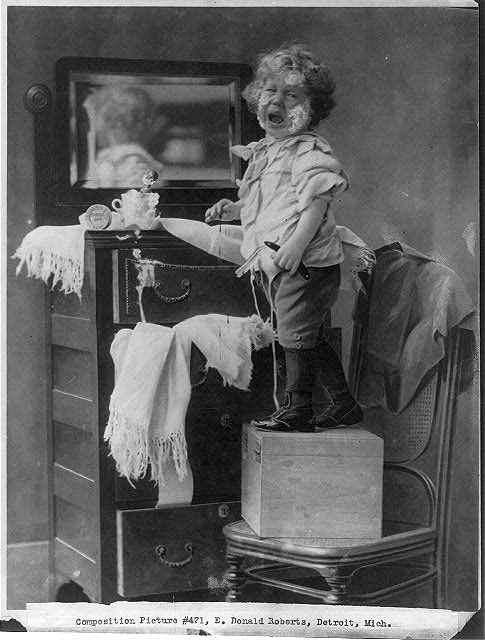
“They just don’t get what I’m trying to do here!”

The publishing delays I experienced with A Housefly in Autumn allowed me to enter it into consecutive ABNA (Amazon Breakthrough Novel Award) competitions. I achieved different levels of success, with a wide array of feedback.

One year, both judges of my 5,000 word excerpt were overwhelmingly laudatory in their comments. The next year, both judges (different people each year) had reservations. Their reservations were about the language used. It just so happened that the language was one of the foremost things “I’m trying to do here.”

I knew the language would be somewhat unusual to the contemporary reader. I hoped it would add some old fashioned charm to match the setting of the story. Since it wasn’t an issue the first year, I began to feel more confident about my choice.

My confidence was misplaced. Even though one of the second year judges admitted that the language grew on him/her, and that the excerpt turned out to be one of his/her favorites, the language was still an issue.

Having won two of four judges, and eventually converted the third, it would have been easy for me to discount the fourth judge’s opinion and bury it under the “They just don’t get what I’m trying to do here.” mantra. In fact, that is just what I was sorely tempted to do.

It would have been a big mistake.

That fourth judge is not just a single person. Judge #4 represents thousands of potential readers. Potential readers are not so easy to come by, and if a quarter of them find the writing awkward from the start, that’s a big loss.

Also, keep in mind that these judges were committed to reading the entire excerpt, regardless of their first impressions. In the real world, the third judge likely would have given up on the book before it had a chance to win him/her over and become a favorite.

That means that half of the potential readers probably would have put the book down because the language didn’t suit them. It would grow on none of them, because they would stop reading. This criticism had to be taken seriously.

If two of four judges “just didn’t get what I was trying to do here,” it was because I wasn’t doing it right. It’s not the reader’s responsibility to figure out my motives. It’s my job to entertain the reader, and not let my motives get in the way of that.

It's not your audience's job to figure out the secret genius to your art.

It’s not your audience’s job to figure out the secret genius to your art. That could take a lot more time than they have to spend.

It was time to go back to work. It was time to reassess “what I’m trying to do here.”

“What I’m trying to do here,” first and foremost, has to be to engage and entertain the reader. If not that, nothing else happens.

In order to do this, the language needed to be modified. It wasn’t as difficult as I feared. A word change here, a slightly different phrasing there, could alleviate the awkwardness to the contemporary reader without compromising the cohesion of the language to the story.

There may still be some readers who find the writing awkward. There’s always the danger of that. I go forward knowing that I did my best to move my motives out of the way of the story while preserving the story I needed to tell.

For that, I am thankful for the judges who “just didn’t get what I was trying to do here.”