Amazon giveaways: the best-kept secret from Amazon customers?

This year, Amazon.com has added a new giveaway feature. Here, you can sponsor a giveaway of virtually any product sold on Amazon.

Having done a couple of Goodreads giveaways for A Housefly in Autumn, I was interested in how this new feature could help me promote the book. After doing a little research on Amazon’s official giveaway site, I’m still unsure how this feature would help.

Amazon.com and it’s international incarnations reach hundreds of millions of customers. This makes any tool Amazon unveils worthy of consideration. But after reading up on this new giveaway service, I think it may be more useful to larger vendors with a wider social reach than myself.

The main problem with Amazon giveaways, from the perspective of the small, independent publisher, is that there appears to be no readily accessible site within the entire realm of Amazon where customers can go to peruse the available giveaways. (As far as I can tell, there is only a Twitter hashtag: #AmazonGiveaway.) Instead, the sponsor of the giveaway is issued a unique link to disseminate to interested parties in order to bring them to the specific giveaway.

By contrast, the biggest advantage to a Goodreads giveaway is that readers can browse the entire catalog of available giveaways and thereby find new books that may interest them. The giveaway is a tool to reach potential customers with whom you might not otherwise make contact.

In the case of Amazon, you are left to promote your promotion, which seems like an extra, unnecessary step to promoting your product. Everyone in my network has already received promotional information about my books. I want tools that reach beyond my already-establish network.
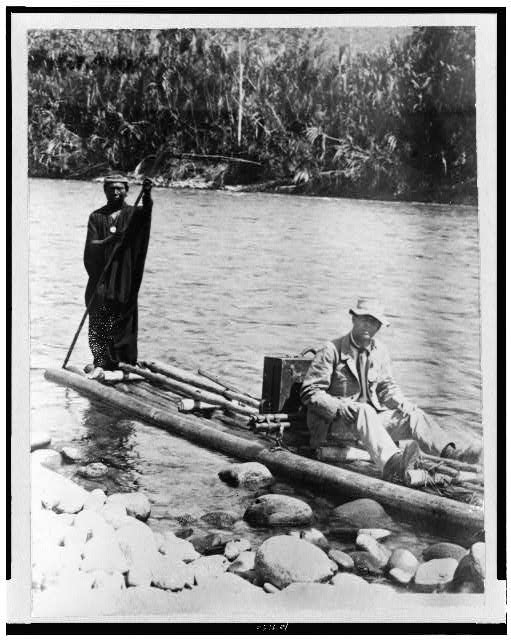
Amazon jungle

I went to the Amazon to give away some books, but my books got lost in its immense jungle. (Image: Keystone View Company)

In the description of this service, Amazon says, “Run promotional giveaways to create buzz, reward your audience, and grow your followers and customers.” I could much more easily grow my followers and customers if all Amazon customers were allowed to discover my books by browsing the list of available giveaways.

I can imagine that this service could be valuable to individuals and corporations with large social followings. But for the little guy, it’s hard to spot the advantage. If I want to give a book to friend, I can do that on my own.

Amazon has done a lot of good things for independent authors and publishers, and maybe this new feature was intended for somebody else. Also, the feature is relatively new and perhaps still evolving.

If Amazon opened up a catalog where its customers could browse and enter any of the various giveaways, I believe I would begin sponsoring giveaways for my books in a heartbeat. In the meantime, I think I’ll hold off until somebody can explain the advantages of the system as it now stands.

Would you consider doing Amazon giveaways? Have you done any? How did they go? Whether you’ve tried them or not, can you spot an advantage to the small seller that I’ve missed?

Word of Mouth advertising: inexpensive and unmeasurable

Whenever someone takes the time to tell me they enjoyed one of my books, I make sure two things are part of my reply. First, I say, “Thank you,” because it’s the proper response. The second thing I say is, “Tell your friends.”

There are many forms of paid and unpaid advertising the self-published author can use. Compared to the advertising big corporations can afford, all of these forms reach relatively few people. Yet, even for a large publisher, paid advertising would not be enough to carry a book to success. Never can enough people be influenced by paid advertising alone. If people who enjoy a book don’t talk about it, the book will not reach its potential.

Word of mouth is one of the most handy marketing tools available to the micro-publisher. It’s free and nothing carries more influence with readers than the opinions of trusted friends. The problem with word of mouth is it’s difficult to measure.

Easiest to gauge are the people you know, and even this is not so simple. Sometimes people who have enjoyed my books will ask to buy an autographed copy to give to a friend. This is an easy tally for word of mouth. You can mark it down, and it’s already sold you an extra book. Outward from here, things get murky. People may tell you they loved your book, but it’s usually hard to know if they’ve told that to anyone besides you.

Get the word out

“Hey fellas, let me tell you about this great book I just finished! After that, maybe we can go put out a fire.” (Image: Gordon Parks/US Farm Security Administration)

You don’t want to grill them about the number of people with whom they’ve shared their enjoyment of your work, because you don’t want to become that author. They just wanted to be entertained; they didn’t expect there would be homework. So you don’t ask, because you want them to remember their enjoyment, not that you robbed them of it by leaning on them to pimp your book.

It is always gratifying to hear that somebody enjoyed your book, but it can be frustrating not knowing if that enjoyment is being translated into any meaningful word of mouth. Once you come to terms with the fact that there will never be a good way quantify the number of times satisfied readers recommend your book, you can focus on the positive. Your hard work has resulted in a book people are enjoying. That’s a big deal because it’s the first prerequisite for successful word of mouth advertising.

Even though you can’t know the number of personal recommendations of your book, you do have the power to increase that number by continuing to work hard to promote your book. The more people you reach, the more people they, in turn, will reach.

You have to trust your readers. You’ve worked hard to interest them and touch their emotions in some way. If you’ve done it well, they’ll share it. But it’s not a breach of faith to drop in a polite, “Tell your friends,” after showing gratitude for a compliment.

If you truly love me, you’ll ignore my screams of terror

Like many things in life, writing is a roller coaster ride. But it’s a ride that most writers can manage by themselves, or with the encouragement of a small group of peers. The scarier roller coaster departs the platform after the book is written. This is the hell ride known as promotion.

Promotion is a huge, daunting monster you can’t work out in your own head while sitting quietly. If you are a low-key, quiet type of person, it can be difficult to even board this ride without lots of support. It’s important to have a few people who love you. It’s also good to have some people who like you.

The people who love you, a spouse for example, can help psyche you up for this ride that goes so much against your nature. They comfort you and coax you toward the car, then, when necessary, in the ultimate act of love, they give you a good shove into the seat and slap down the restraint bar over your arms. You know you need to do this, but it’s hard to overcome your nature. Only the most cherished loved ones will be there to tenderly ignore your screams of terror and lock you in before you can run away.

If you are that shy, quiet writer, do yourself a favor by marrying someone completely opposite from you. Find someone who likes to plan events, rocks social media, and has no qualms about tooting your horn for you, because face it, you’ve never been any good at tooting it yourself. Your better half makes it sound much more melodious than you ever did.

running the show

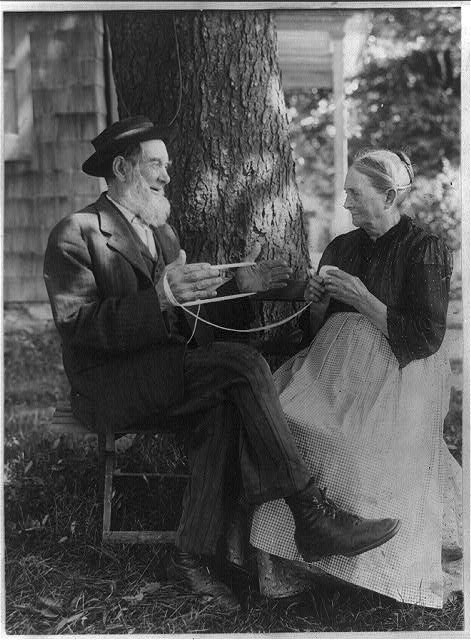
“You just hold your hands out and smile big, and I’ll make sure this whole ball of yarn happens.”

Do your best to make sure they love you, because they really excel at these things when their heart is in it.

If they are the best thing you’ve got going for you in life, they will also be the best thing you’ve got going promoting your books.

This crazy ride is also easier if you have people who like you. These are the people who show up to your signings and pay their hard-earned money for your books, not because they are sure you are this generation’s Steinbeck, but because they like you and they want to show you some support.

They get excited about having you sign their copies, not because your autograph promises to become valuable, but because your signature is a memento from that time when they watched you reach for the stars, regardless of how close you came to touching any sky.

A little help

It’s nice to have friends to look out for you when your comfort zone gets turned upside down.

I’ve always tried to be likeable to the people I know. This has paid off in the support I have received from them. I wonder what would happen if I had spent more time getting to know a larger group of people. But that’s where my nature limits me again. At least I didn’t spend my life pissing off my relatively small group, so I’ve got that going for me.

And that’s a good start.

The Goodreads giveaway learning curve

A few posts back I mentioned that I was holding a Goodreads book giveaway for A Housefly in Autumn. That giveaway has come and gone. Here is what I learned.

Submit your giveaway at least a week before you want it to begin. It’s supposed to take Goodreads a couple of days to approve your giveaway. Mine took about a week. I had scheduled my giveaway to begin the day after I submitted it and run for a month. Consequently, I lost about six days off the front of it. I wouldn’t have minded so much losing six days in the middle, but what I didn’t know is the first few days and the last few days of a giveaway are the most important.

There are tons of giveaways on Goodreads. Most folks who are interested in them look in two places: the list of new giveaways and the list of giveaways about to end. When my giveaway was finally approved, it was already six days old. My listing, when it showed up, was already deeply buried with in the new list. Only giveaway hunters with great perseverance would dig that deep. I missed out a good number of entries because of this.

giveaway pitch

According to the site, the average giveaway garners 825 entries. When you miss the first week or your own giveaway, you get fewer.

The middle of a month-long giveaway is the doldrums. The book is prominent on neither of the lists people search. Hence, the number of entrants drops sharply. Only after I had set up my giveaway did I find good advice about ignoring the Goodreads recommendation for longer giveaways. A long middle does no good. It’s best to jump directly from the new list to the about to end list. A week seems plenty long for a giveaway.

I offered autographed copies. This was another mistake. Autographed copies meant I would have to mail them myself, which led me to yet another mistake. I limited my giveaway to the U.S. because I didn’t want to have to pay huge amounts to ship books overseas. If I had not offered autographs, I could have bought the books online and had them shipped directly. Who knows how many entrants I cut myself off from by limiting the giveaway like this?

There are two main goals in offering a giveaway. The first is to get members to add the book the their “to-read” lists. The mistakes already mentioned hindered my efforts in this direction. As it was, 525 people entered, of which 228 added the book to their personal lists. Many of those people have more than 1,000 books on their “to-read” lists; some have tens of thousands. This means there are thousands of books on lists that will never be read.

The second goal of a giveaway is to garner reviews. Goodreads say that around 60% of people who win giveaway books write a review. Most commentary I’ve read suggests this is overly optimistic. I gave away six books. By Goodreads numbers, I should receive at least three reviews. I would love for this to happen, but one thing I’ve learned in this self-publishing biz is not to hold my breath.