Flowers – flash fiction

The cemetery was within walking distance. In fact, it was in shuffling distance.

Arthur shuffled through the front entrance and made his way along a familiar route. He stopped at his usual place, before the stone that said Claire Adams. It would be nice if there were a bench nearby, but he’d grown used to talking to her standing up.

The stones on either side had flowers tenderly placed around them. Claire’s stone didn’t have flowers. Arthur never brought flowers. Weeks ago, those flowers around the other stones looked fresh and vibrant. Now they were brittle, dried out, and brown.

“Flowers die,” he muttered to himself.

He stared at Claire’s name on the stone. “Well, it’s prescription day,” he told her. “You know I always stop by on my way the to the pharmacy.”

“I miss you,” he said. “I even miss your scolding. You scolded me a lot towards the end. I wonder if you still loved me as much.” He shrugged. “Maybe you loved me more. To be honest, I have no idea. It was easier to feel certain about things when we were young.”

For a few minutes, he stood silent. He’d never loved the sound of his own voice. Silence made him think about the future, and he didn’t like that either.

“I’d better get going,” he said. “Got to get my scripts.”

He walked slowly these days, but he still had the stamina to make it to the pharmacy. He might have had his prescriptions delivered, but it was exercise, and he looked forward to seeing Sara.

Sara was the pharmacist who worked Tuesday mornings. She was warm and bright, and she was nice to him. A rare bouquet of kindness, she made the world smell sweet again.

Sara knew him. She knew all his prescriptions. He didn’t have to say a word to her about drugs. She gave him exactly what he needed. He never spoke to Sara about business. It was always a pleasant visit with a friend.

His pace quickened as he passed the sliding door.

The pharmacy counter was at the back of the store. Arthur’s lips turned up as he walked down the shampoo aisle. At the end of it, they fell into a frown.

Standing behind the counter, was a woman who was not Sara. She had a stern look. She did not smile like Sara.

“May I help you, sir?” she asked in a wholly businesslike fashion.

Arthur struggled to respond. At last, he found a couple of words. “Where’s Sara?”

The lady seemed puzzled. “Sara?”

“Sara,” he said.

 “Who’s Sara?” she asked, as if he were making things up.

“Sara,” he said. “The pharmacist.”

Recognition came at last. “Oh! You mean the girl who used to work mornings. She transferred to the store across town.”

Across town might as well be the far edge of the universe. Sara was gone. Forever. Replaced by this stranger who would talk about prescriptions.

“Do you need to pick up a prescription?” the fading pharmacist asked.

Arthur stared at the counter. “Flowers die,” he mumbled.

“Excuse me? Do you need something?”

It was too late to start over. Arthur looked up at her drying edges. It was too late.

“No. Nothing,” the old man said as he turned and slowly shuffled away.
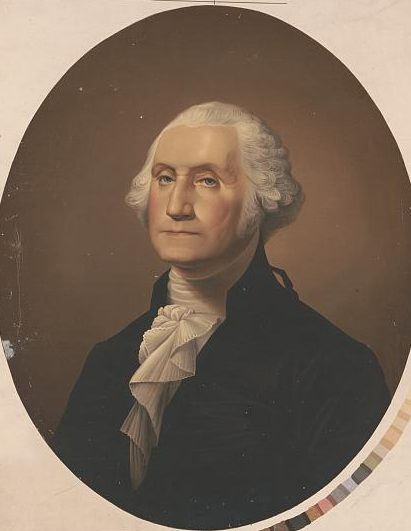
George Washington abbreviated

Hello History Buffs! For my next trick I will attempt to summarize an 800 page biography in 600 words. Here are my takeaways from Washington: A Life, by Ron Chernow.

The oddity about George Washington’s rise to prominence was the peculiar way stepping stones fell in his path. The young Washington seemed always to be losing a relative to an untimely death. Each time, it left him with more money and a greater position in society. If it had been a less trustworthy person, I’d  have grown suspicious. In his case, I concluded Washington was the hub of a circle of people who were significantly wealthier and unhealthier than he was – until they all died and he got their stuff. Then, they were just that much more unhealthier.

Washington made hay with the power he inherited, but all the stuff didn’t do him much good. Southern planters, for all their apparent wealth, were chronically in debt. Washington, with all his land holdings, inheritances, and whatnot, was not immune to this condition. He could have been the poster boy for it.

Who doesn’t love getting lots of big packages in the mail?

Washington’s habits kept him in debt. He had a taste for nice things. He was forever ordering crockery emblazoned with the family crest. He needed a new uniform for every camping trip and dressed all his attendants alike, as if they were bridesmaids. He kept up the décor like the Mother of His Country.

Washington was often unavailable to manage his own finances. Sacrificing his time to go fight the French, the British, and almost the French again, he had little time to spend maximizing his personal profits. Between running an eight-year revolution and serving as a two-term president, Washington was forced to leave his personal estate to managers less interested in his bank balance than he was.

George Washington could tell a lie. Washington lied in the way normal folks lie. He fibbed to protect his reputation. When a man of sound judgment makes a poor choice, he may feel pressure to fudge on the circumstances, as Washington did in his early military career. Washington also told white lies to smooth over differences with colleagues and to avoid moral dilemmas, like being a slave owner who wished he could be an abolitionist, if he could do so without inconveniencing himself.

The best thing about Washington’s lies are the ones he wouldn’t tell. He wasn’t tempted by the big, political lie. He didn’t spread lies about political foes, although he was the victim of many smears. He left it to his successors to bring official dishonesty to the presidency, which they lost no time in doing. Washington seemed more interested in setting a high bar for the presidency than in getting what he wanted at any cost.

Washington was an ambitious self-promoter. In a country full of ambitious self-promoters it was fortunate the one who rose to the top at the crucial moment was a rare man who, having gained power and fame, was content not to corner the market on it.

George Washington didn’t have the most brilliant mind of his time. He had something more important; he had wisdom. He knew where to turn when he needed help from one sort of genius or another, and he carefully considered something geniuses often overlook: tomorrow.

George Washington wasn’t a perfect man, but he was the perfect man for a particular time and place in history. It is hard to imagine many men who could have made a success out of the losing proposition that was the American Revolution. What other man, standing at the precipice of unlimited power, would have used it so benignly and handed it off so willingly?

O Pioneers!

You know who had it rough?

Pioneers.

I mean, traveling through strange lands without so much as a highway rest stop; building their own houses out of sticks, mud, and whatever forest parts they could chop to fit; having to live with their entire families in one or two rooms, with no escape from the children – that sounds horrible.

We say, “I’m going out for a beer.” They could only say, “I’m going out to be attacked by a bear.”

But this is a writing-themed blog, so in literary terms, you know who had it rough?

Pioneers.

I’m speaking of all the literary pioneers who wrote books before the age of the word processor. It’s a wonder books were written at all. Up to about the Mark Twain era, they didn’t even have typewriters, and even typewriters seem like some sort of torture device to the modern writer.

Munitions workers count typewriters to be shipped to Europe and dropped from bombers over Nazi Germany.

If I had to write a novel with a pen, it would be the length of a post-it note. That’s when my hand starts cramping. I suppose I could write one post-it note’s worth per day. I can fit about six words on the standard post-it; upwards of three of them are legible.

I guess the literary pioneers had tougher hands than I do. But it’s not just the physical aspect that amazes me. How do you cut and paste on notebook paper? Yeah, you can cross out a word and write a new one overtop, but what happens when you’ve got to move paragraphs around? What happens when you made a continuity mistake five chapters ago and you’ve got to rework all that plot? I think I’d rather build a house out of sticks and mud.

Here’s another thing to think about. Back in the day, many novels appeared as serials in journals. I don’t know the details of this process, but I have a suspicion they wrote the chapters as they went. That is to say, chapters 1-5 were already printed and read while chapter 6 was being written. Imagine writing a novel where you can’t go back and fix the stuff that doesn’t work anymore with the direction you want it to take. You’d have to have a pretty clever mind to make it all mesh without the Delete button.

I’ve been known to have some fun critiquing classic fiction – you know, picking on people who are too dead to defend themselves, because that’s the way I roll.  Beneath those playful jabs is a reverence that inspired me to read all those classics. Can they be wordy and meandering? Yes. For all that, they are still amazing accomplishments. Give me only a pen, paper, and some friends with typesetting equipment and maybe I would become accomplished enough to get mauled by a bear.

I’m not saying my reverence for the literary pioneers will stop me from poking fun at them, but my sarcasm is forged from love. Just ask my kids.


What’s in your wallet? – flash fiction

I asked the nurse to hand me my wallet. She fumbled it a little and a condom fell out. She kept a straight face, discretely picking it up and setting in on my blanket. Then she left the room, not wanting to burst out laughing in front of me.

Rocky, my roommate, grinned at me from his bed. He was 50 years older than me, with his scraggly beard and glassy eyes.

“Sorry about that,” I said.

Rocky chuckled. “I understand. I was a young buck once. You a college boy?”

“Yeah.”

“I never went to college, but I did have my fun.” He nodded at an inevitable transition. “Then I got married. Margie and me was married 40 years, and I liked that a whole hell of lot better than carrying one of them things in my wallet.” He gestured toward the condom I struggled to stuff back into its home.

“40 years? That’s awesome!” It seemed like the right thing to say.

“It was.” He sighed. “Except for the last few. She got Alzheimer’s. I carried her license in my wallet ‘cause she’d lose it otherwise. She’d lose anything you gave her.” He shook his head. “Then she’d snip at me about it. Finally I said, ‘Margie if this next 40 years don’t go no better, I’m calling it quits.’ That was the last joke I told her.” He frowned. “Not a very good joke.”

“I’m sorry.” I didn’t know what else to say.

“She passed almost two years ago.”

I didn’t want to say sorry again. “Do you still keep her license in your wallet?”

“No. I couldn’t look at it every time. It only reminded me of the past. But I guess she told the last joke. After all that time wedged in that little sleeve, it left a faint impression of her picture on the plastic, like a ghost staring up at me.”

“Did you get a new wallet?”

“Oh no. I don’t mind the ghost. It doesn’t give me bad memories; it says she’s still with me. And being how I already invested 40 years, I guess I’ll keep her.” He turned his wet eyes toward the window and spoke at the sky. “Yup, I guess I’ll keep her.”