Why I stopped submitting short fiction to literary journals

When I first got serious about sending short fiction to literary magazines, I didn’t realize the difference between getting a story accepted and actually having the story published. Those were callow days.

Before electronic submissions, you printed a copy of your story for each prospective journal. Each copy needed a cover letter. You had to remember to change the journal name on each letter and put the right letter into the right envelope if you didn’t want to embarrass yourself.

Each mailing contained a stamped, self-addressed envelope (SASE) for the reply letter. You carted off your stack to the post office. If you were productive, the trip could be expensive.

It felt good to get a bundle of stories out. That feeling faded as the waiting game began. Still, walking to the mailbox every day held a little extra drama. There was always a journal that responded quickly, with words that meant: we didn’t bother to read your story; nonetheless, we’re sure we didn’t like it.

Over time, the rejections trickled in. They were terse, rarely requiring a full sheet of paper. Some editors scribbled a note in the margin to make it seem more personal, but rejection was rejection. NO was enough.

I began expecting all SASEs in my mailbox to contain rejections. One day I was opening a rejection when the strangest thing happened: I couldn’t find the word NO. The letter said Yes, as in, Yes, we would like to publish your story. It wasn’t a famous magazine, but few literary journals are. I put the letter on the refrigerator to show the world (or the part of it that passed through my kitchen) my success.

I knew it would take several months for the publication of the story, but it would be worth the wait.

I waited, and waited, and waited.

After several months, I emailed the editor. I got no reply.

I sent emails to everyone associated with the journal. Finally, someone replied. The magazine didn’t exist anymore. The non-profit publisher ran out of money. They wouldn’t be publishing my story, no longer having a vehicle for publishing stories.

This disappointment was superseded by other events . I got another story accepted and published by the first journal to which I sent it. They worked quickly and did an excellent job with the presentation.

Then I got a story accepted by the journal of a well-respected university – a name everybody would recognize. The story was published in a timely manner, but the presentation made me hesitant to hand out copies to everyone I knew.

They’d requested an electronic copy. When they converted it to a different format, some punctuation appeared as random symbols. They didn’t catch this, and it was printed with the odd symbols.

Soon after, a story was accepted by another university journal. It wasn’t a big name, but I was still happy to celebrate any success. That story has never been published. It never will be. I can’t tell what happened to that journal. It just sort of disappeared.

I don’t submit to journals anymore. Not because of the uncertainty or the disappointment. I stopped because of the modern ease of self-publishing. In 2011, I gathered my best short fiction: stories published in literary journals; stories accepted but never published; stories never accepted; and stories never submitted. I put them together and self-published the book: A Smile Through a Tear.

The roller coaster ride of journal submission eventually led to this.

The roller coaster ride of journal submission eventually led to this.

It was a great experience. I controlled the content, the timeline, and the appearance. It’s a modest endeavor, but it’s all mine. I hope to add many more books to my little self-publishing catalog. But if my projects fail, at least I won’t have to wait months for somebody to tell me about it.
I have 12 Goodreads followers and I still have to do my own plundering. What’s up with that?

It’s been said in many places that Goodreads is not the easiest site to navigate. Be that as it may, I’ve been trying to get more involved in Goodreads as an author. I’ve done a few giveaways and I even broke down and added a photo to my author profile. It’s the same photo on the sidebar here, so don’t rush off to Goodreads excited that I might be any better looking there.

Going to Goodreads periodically to see how a giveaway is doing, there are things I don’t often notice. Today I saw something I hadn’t noticed before. Somehow, I magically have 12 followers on Goodreads. My first thought was, “Wow, that’s awesome! I’m getting so popular. Yay, Me!”

I’ve had one follower since the beginning. This is an author friend of mine who has a very supportive personality and does all kinds of sweet things for other authors, like giving them a follower of their very own. For the longest time, she was my sole follower. And I was fine with that.

A few months ago, I noticed I had picked up two more followers. I link to my other blog on Goodreads (as far as I know I can only link to one, and the other has a more general appeal). I think these two followers had liked posts from my blog on my Goodreads page. Each of my posts gets between zero and two Goodreads views. Honestly, I don’t know how they found me or my blog but it was nice to have followers, with an s.

Today, I was playing on my author dashboard when I happened to see faces of a dozen people boxed off to the side. And guess what? The label over their heads said they are my followers. 12 followers – an increase of like 400% over the three I knew about before. That’s gangbusters, right?

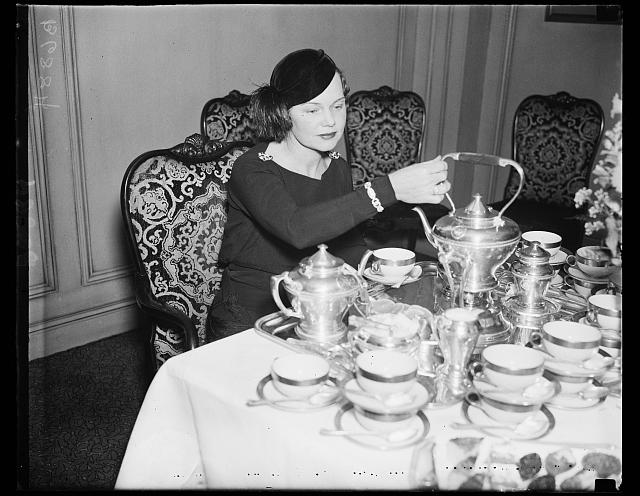
That’s when it hit me that I really don’t know what a Goodreads follower does. They certainly don’t bring me tea or plunder enemy villages at my command. Are they reading my books? All 12 of them? I doubt it. So who is this motley gang of people who are suddenly part of my literary life?

lonely tea party

I still have to pour my own tea. And with all the tea I drink, that eats up a good part of my day.

I did an online search for “Goodreads followers” but it didn’t shed any light on the purpose or activities of my new crew. I even clicked the follow button on my author friend’s page, which I’m ashamed to say I should have done years ago. But after becoming one of her followers, our relationship did not noticeably change. She has many followers so I’m not even sure she’ll notice I’ve joined their ranks.

My best guess is that my followers get some sort of notification about new blog posts. I think they are following my blog (via Goodreads) more than they are expressing some sort of personal devotion to me. I guess I can live with that. It was exciting for a minute to think I had my own band of disciples, but I’m used to getting my own tea, and I don’t really have any enemies with villages right now, so . . .

Amazon giveaways: the best-kept secret from Amazon customers?

This year, Amazon.com has added a new giveaway feature. Here, you can sponsor a giveaway of virtually any product sold on Amazon.

Having done a couple of Goodreads giveaways for A Housefly in Autumn, I was interested in how this new feature could help me promote the book. After doing a little research on Amazon’s official giveaway site, I’m still unsure how this feature would help.

Amazon.com and it’s international incarnations reach hundreds of millions of customers. This makes any tool Amazon unveils worthy of consideration. But after reading up on this new giveaway service, I think it may be more useful to larger vendors with a wider social reach than myself.

The main problem with Amazon giveaways, from the perspective of the small, independent publisher, is that there appears to be no readily accessible site within the entire realm of Amazon where customers can go to peruse the available giveaways. (As far as I can tell, there is only a Twitter hashtag: #AmazonGiveaway.) Instead, the sponsor of the giveaway is issued a unique link to disseminate to interested parties in order to bring them to the specific giveaway.

By contrast, the biggest advantage to a Goodreads giveaway is that readers can browse the entire catalog of available giveaways and thereby find new books that may interest them. The giveaway is a tool to reach potential customers with whom you might not otherwise make contact.

In the case of Amazon, you are left to promote your promotion, which seems like an extra, unnecessary step to promoting your product. Everyone in my network has already received promotional information about my books. I want tools that reach beyond my already-establish network.

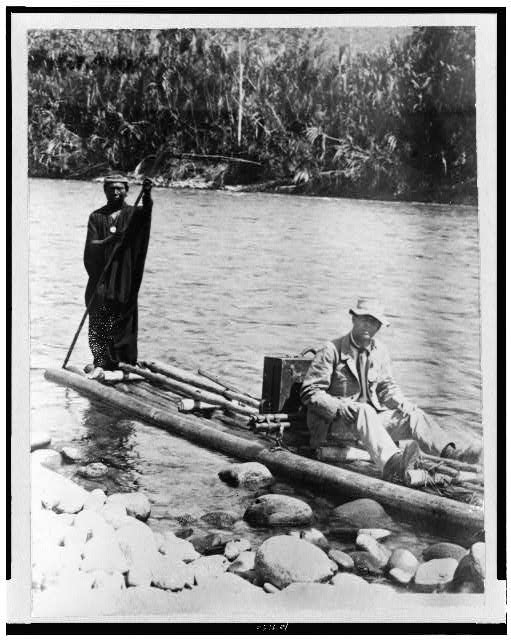
Amazon jungle

I went to the Amazon to give away some books, but my books got lost in its immense jungle. (Image: Keystone View Company)

In the description of this service, Amazon says, “Run promotional giveaways to create buzz, reward your audience, and grow your followers and customers.” I could much more easily grow my followers and customers if all Amazon customers were allowed to discover my books by browsing the list of available giveaways.

I can imagine that this service could be valuable to individuals and corporations with large social followings. But for the little guy, it’s hard to spot the advantage. If I want to give a book to friend, I can do that on my own.

Amazon has done a lot of good things for independent authors and publishers, and maybe this new feature was intended for somebody else. Also, the feature is relatively new and perhaps still evolving.

If Amazon opened up a catalog where its customers could browse and enter any of the various giveaways, I believe I would begin sponsoring giveaways for my books in a heartbeat. In the meantime, I think I’ll hold off until somebody can explain the advantages of the system as it now stands.

Would you consider doing Amazon giveaways? Have you done any? How did they go? Whether you’ve tried them or not, can you spot an advantage to the small seller that I’ve missed?

Word of Mouth advertising: inexpensive and unmeasurable

Whenever someone takes the time to tell me they enjoyed one of my books, I make sure two things are part of my reply. First, I say, “Thank you,” because it’s the proper response. The second thing I say is, “Tell your friends.”

There are many forms of paid and unpaid advertising the self-published author can use. Compared to the advertising big corporations can afford, all of these forms reach relatively few people. Yet, even for a large publisher, paid advertising would not be enough to carry a book to success. Never can enough people be influenced by paid advertising alone. If people who enjoy a book don’t talk about it, the book will not reach its potential.

Word of mouth is one of the most handy marketing tools available to the micro-publisher. It’s free and nothing carries more influence with readers than the opinions of trusted friends. The problem with word of mouth is it’s difficult to measure.

Easiest to gauge are the people you know, and even this is not so simple. Sometimes people who have enjoyed my books will ask to buy an autographed copy to give to a friend. This is an easy tally for word of mouth. You can mark it down, and it’s already sold you an extra book. Outward from here, things get murky. People may tell you they loved your book, but it’s usually hard to know if they’ve told that to anyone besides you.

Get the word out

“Hey fellas, let me tell you about this great book I just finished! After that, maybe we can go put out a fire.” (Image: Gordon Parks/US Farm Security Administration)

You don’t want to grill them about the number of people with whom they’ve shared their enjoyment of your work, because you don’t want to become that author. They just wanted to be entertained; they didn’t expect there would be homework. So you don’t ask, because you want them to remember their enjoyment, not that you robbed them of it by leaning on them to pimp your book.

It is always gratifying to hear that somebody enjoyed your book, but it can be frustrating not knowing if that enjoyment is being translated into any meaningful word of mouth. Once you come to terms with the fact that there will never be a good way quantify the number of times satisfied readers recommend your book, you can focus on the positive. Your hard work has resulted in a book people are enjoying. That’s a big deal because it’s the first prerequisite for successful word of mouth advertising.

Even though you can’t know the number of personal recommendations of your book, you do have the power to increase that number by continuing to work hard to promote your book. The more people you reach, the more people they, in turn, will reach.

You have to trust your readers. You’ve worked hard to interest them and touch their emotions in some way. If you’ve done it well, they’ll share it. But it’s not a breach of faith to drop in a polite, “Tell your friends,” after showing gratitude for a compliment.