Clinging to life in the Goodreads Emergency Room

I’m haunted by this recurring vision in which I have a sudden crisis. I am rushed to the hospital and hooked up to all the most sophisticated machinery. As the doctor hovers over me and shines a light into my glassy pupils, the nurse hooks up the monitor, displaying all my vital statistics, as found on my Goodreads Author Dashboard.

The nurse starts reading important stats for the doctor to consider. “His average rating is stable at 4.29, but it’s based on only 21 ratings.”

“How many reviews?” the doctor asks.

The nursed scans the screen. “Seven.”

The doctor sighs. “That explains why I’m seeing signs of a collapsed ego.”

“It gets worse,” the nurse explains. “There are four books showing, but they only show up 1200 times on ‘to read’ shelves.”

The doctor shakes his head. “That’s only 300 per book. It’s a miracle he’s still writing.”

The nurse gasps as she continues reading. “Oh my goodness! There’s only one ‘currently reading’.”

“For each book?” the doctor asks.

“One, total,” the nurse replies, stifling the instinct to cover her mouth with her hand. “He’s hanging on by a thread.”

The doctor wipes sweat from his brow. “This is serious. Please tell me he has a few followers.”

“Yes, 37,” the nurse replies, trying to sound up-beat.

“That’s not good,” the doctor laments, “but I’ve seen worse. Is there anything we can use to jump start his writing career?”

“Well, he’s got quite a number of blog posts, but not too many people read them, maybe one view per post.”

“We’re going to have to do something to get his numbers up before his ambition flatlines. Set up some Giveaways, STAT! Let’s start with three and see where that gets us. Then I want him in some groups. Maybe we can get him interacting with people, if it’s not too late. If we can’t get his numbers up, he has no chance of becoming relevant.”

Later, the doctor greets my loved ones in the waiting room. “His writing career is not out of danger,” he tells them. “The good news is we were able to raise his average rating slightly, to 4.32. Also, we got his ‘to read’ shelf appearances up over 1300 and his followers to 39. These still aren’t great numbers, but, as far as his writing career goes, it’s a step in the right direction.”

“Doctor, I have just one question,” my wife says.

The doctor leans forward, showing a large, empathetic ear. “What is it?”

“Why do you keep making air quotes with your fingers every time you mention his writing career?”

5 reasons why I don’t aspire to be a famous author

I used to be like that. I used to have fantastic dreams about my books becoming best sellers: Oprah told everybody how good I was; I made money hand over fist; I went on talk shows, and all the eyes staring at blinking cursors spent half their time hoping to emulate my success and half their time resenting it.

I’ve changed. The more I thought about it, the more I realized fame and fortune would be too much hassle. I’m content being a regular guy with a modest income. People leave me alone. Sure, my kids will have to collect 47 scholarships to be able to go to college, but it’s good to establish goals early.

Here are five reasons why I can’t be bothered to become a rich and famous author.

Paparazzi

I can’t have people chasing me around with cameras, waiting for me to do something embarrassing. They wouldn’t have long to wait. An individual as socially awkward as I am would become a feeding frenzy for the press. People forget all my gaffs because I’m just some random guy. They just shake their heads and walk away, and that’s how I like it.

Spain

All my new, hoity-toity friends would be constantly hounding me to go back to Spain again this year. “That little villa overlooking the Mediterranean you took last season was just so charming, you simply must rent it annually.” I’m used to driving to my vacations in a minivan. I don’t think there’s an interstate to Spain from here. Plus, “I’ll turn this private jet around right now!” rings hollow as a threat to bickering children.

Charming as all hell, but where do I park the minivan?

Mega-Signings

People lined up out the door, all of them wanting their books personalized, and the names people have today. I can’t spell any of them. They’d have to spell them out for me, and my penmanship is bad enough when I’m not distracted by trying to listen. At my little signings, there’s a short line and it moves fast, because everyone gets a book inscribed “To Jim”.

Impatient fans

Everybody would always be wanting to know, “When’s your next book coming out?” With all the mega-signings, Mediterranean vacations, and remembering not to pick my nose in public, when the hell do I have time to write a next book? As it is now, I have a much less stressful relationship with my public. By unspoken agreement, they don’t ask me when my next book is coming out and I don’t ask them if they bothered to read my last one.

Complacency

I’d get so wrapped up in carting my big royalty checks to the bank, I’d lose my fire and start writing lazy prose instead of sharp, insightful pieces like this one. I’d wear pajamas for a way-too-large segment of the day. Maybe I’d just do underwear. Not being distracted by constant trips to the bank, or Spain, and not having to worry about how to spell multi-syllable names, leaves me plenty of time to be thoughtful and stay hungry. For example, right now I’m thinking about how hungry I am. I bet the famous guys haven’t had gritty, real-world thoughts like that in years.

Fame? Who needs it?

Dream House – flash fiction

He stopped the car across the street from the house.

“Why are you stopping here?” his wife asked.

“You know, over the years, whenever I looked at this house, I always thought: Now that’s a beautiful house,” was his roundabout answer.

“Our dream house,” she agreed.

“The whole lot is beautiful. Of course, it’ll look better once the For Sale sign comes down.”

“You can tell the people who lived here really loved this place,” she assured him.

He gave her a flash of smile.

She nodded. “Let’s go inside.”

He shook his head. “I don’t know if that’d be a good idea.”

“Why not? You’ve got the key. What’s wrong with us going in our own house?”

“Technically, it is our house, isn’t it? Okay, but just for a minute.”

He turned the car into the driveway. They went into the house. The big emptiness of it hit them inside the doorway.

Even their voices seemed different in the void. “Remember the first day?” he asked.

“It looked just like this, except completely different.”

“The whole world was completely different then.”

“I remember you said it’d be the perfect place to raise a family,” she told him.

He pursed his lips and looked away.

She took his arm. “I’m sorry. I didn’t mean it that way. Your company downsized. That’s not your fault.”

“It’s getting late,” he surmised without the aid of a timepiece. “We’d better get to the closing and turn over the keys to the new people.”

His hand trembled a bit as he locked the door for the last time. She lifted up his face and wiped a budding tear from his eye. “There will be other good jobs and other dream houses,” she promised.

They got into the car and went away.


I Write Like . . .

There’s a web site called I Write Like that will analyze your writing, compare it to the styles of famous authors, and kick out the name of the author your sample most closely resembles. I have no idea if there is any science behind this analysis. The results should be taken with a grain of salt, but it’s fun to have the site suggest who you write like.

As an experiment, I entered the first few paragraphs of every story in A Smile Through a Tear into the analyzer. Then I entered the last few paragraphs. Here is a table of my results:

Story # Style of the first paragraphs Style of the last paragraphs
1 Cory Doctorow Stephen King
2 Lewis Carroll Cory Doctorow
3 H.P. Lovecraft Chuck Palahniuk
4 Stephen King Dan Brown
5 Margaret Mitchell Chuck Palahniuk
6 Stephen King Chuck Palahniuk
7 Margaret Atwood Dan Brown
8 Dan Brown Cory Doctorow
9 William Gibson David Foster Wallace
10 David Foster Wallace Dan Brown
11 Kurt Vonnegut Cory Doctorow
12 James Joyce Stephen King
13 Jack London Arthur C. Clarke
14 David Foster Wallace H.P. Lovecraft
15 H.G. Wells Jack London
16 Ian Fleming Stephen King
17 James Joyce Bram Stoker


According to the analyzer, I didn’t finish a single story in the style I began it. In some cases, this is not surprising. H.G. Wells’ style might not be all that different from Jack London’s. I can imagine some others on the list having similar styles.

But what’s with this Margaret Mitchell to Chuck Palahniuk transition? According to the analyzer, I’m going from Gone With the Wind to Fight Club in the space of about 6,000 words. I don’t remember writing any scenes where the dashing rake tells the heroine he doesn’t give a damn, and then they start pounding the hell out each other because it feels so good.

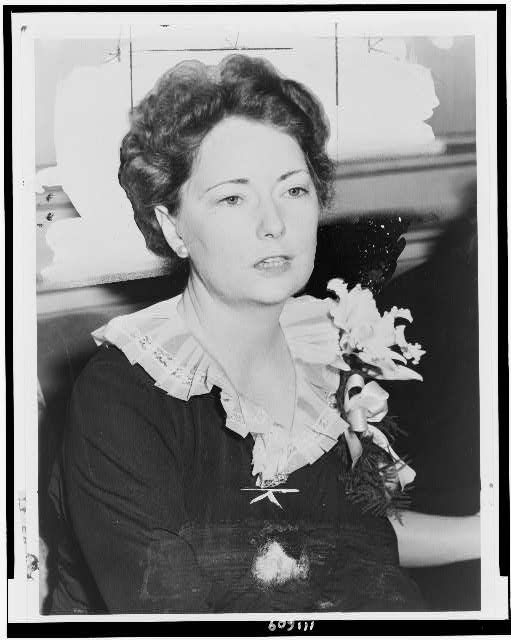
It's an honor, and also a stretch, for me to be compared to Margaret Mitchell.

It’s an honor, and also a stretch, for me to be compared to Margaret Mitchell.

Then I have an H.P. Lovecraft that turns into a Chuck Palahniuk. This must be the one where the protagonist examines the grotto underneath his family mansion because of all the rat noises, only to find a barroom basement where a bunch of guys are pounding the hell out each other because it feels so good. (I’m basing these Fight Club references on the movie, since I haven’t read the book.)

There’s another curious story that begins like Jack London and ends like Arthur C. Clarke. That’s the one where a sled dog befriends a self-aware robot during the Alaska Gold Rush. It’s a touching story until they have to build a fire to stay alive, only to discover that neither has any matches. (Dogs don’t have pockets and robots don’t smoke.)

Another interesting thing about this little exercise: none of my literary idols appears on the list. No one who should have molded the way I write is there. I have not read a word of some of the writers on the list. The one I’ve read most would probably be Stephen King, and I haven’t read more than three of his books.

I’m happy with the list. There are some well-respected authors on it. Besides that, I always intended A Smile Through a Tear as a collection of stories of great variety. I would say there’s some variety in the gulf between James Joyce and Dan Brown. So maybe I accomplished that mission.

Go ahead, give the analyzer a try. If you get any interesting results, feel free to tell us about them in the comments.