How do I know I’m close to being nearly famous? Because the Internet says so (and the Internet never lies).

A funny thing happened while I was Googling myself. What, you don’t Google yourself? Whatever. I’m not ashamed to admit it. I keep track of myself online, because well, really, who else is going to do it?

Anyway, the results were pretty standard stuff: links to my blogs, links to my books on Amazon, the web site that will tell you everything you ever wanted to know about me (or a guy with a very similar name) for a small fee, and a link to my senior picture in the 1985 St. Johnsville Central High Yearbook.

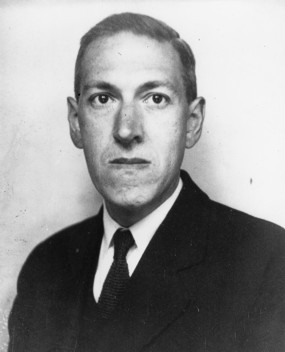
If he had only known about Wikipedia back then, he would have dressed for success.

If he had only known about Wikipedia back then, he would have dressed for success.

There was a link to Berkeley Fiction Review (BFR). They published one of my stories about 10 years ago, so that made sense.

Then there was a link to the BFR Wikipedia page. Why, I wondered, would a search of my name bring up BFR on Wikipedia? I clicked it.

I scanned the page of information about the whys and wherefores of Berkeley Fiction Review. There, in the middle of the page, was my name, listed with about 40 others under the heading, “Notable contributors.” I am on the same list as Charles Bukowski. I confess, I don’t recognize most of the other names on the list, but they must be of some minor renown, as the majority of them have links to their own Wikipedia pages.

I don’t have my own Wikipedia page, but at the rate I’m going, I figure if I keep Googling myself, one will eventually show up for my troubles. And then I’ll be “big time.”

Who knew old Issue 27 would supply a notable contributor to ranks?

Who knew old Number 27 would supply a notable contributor to ranks?

I understand users are allowed to edit Wikipedia entries, but I promise I had nothing to do with putting my name down as a notable contributor. For one thing, I’d be too afraid of crashing the entire Wikipedia empire to attempt making  an edit.

Worse, what if they had a way to trace it and found out I was the one who put my own name on a list of nearly famous writers? That’d be awkward.

I don’t know how I got on the list of “Notable contributors,” but I sure am tickled to be there. I thought about adding a signature line to emails I send that says: “Scott Nagele, Notable contributor,” but then a wave of humility (perhaps it was envy) swept over me. After all, I was one of the minority whose name showed in plain, black font, not one of the specials in the inviting, blue, “link to my personal Wikipedia page” font. My static, disconnected name leads nowhere.

Still, among the many hundreds of BFR contributors over the years who are not notable enough to merit their own Wikipedia entries, I must be among the 20 most notable.  Either that, or somebody just picked a few random names from a past issue in order to fill the holes in the list of blue-fonters. Either way, I’m mentioned on Wikipedia. So how ‘bout them apples?
 

You don’t have to rewrite the good parts

My wife is my initial beta reader. Like me, and in a strange coincidence, she also has three young children. Together with her many jobs and responsibilities, these children make it as difficult for her to find time to read as they make it for me to find time to write – probably more so. Consequently, I must be patient and find something else to work on while awaiting the initial feedback on the latest work.

Lacking a suitable idea for a new project, I am left with the daunting notion of revisiting some old projects. I have four unpublished novels in completed draft form. That is to say there are four that come to mind; there may be others my subconscious finds too painful to contemplate.

Of the four, one can probably be fixed to meet my standards for publication. Another might have potential, but needs serious structural work. The other two are long shots. All four need lots of attention.

It’s difficult to get motivated to do the amount of rewriting that even the best of them would require. Rewriting doesn’t touch the good and the fun parts very much. The peaks are fine; it’s the dark, grimy, stinky valleys that beg rewrites. Your brain gets dirty and sweaty at the very bottom of the pit.

I know I eventually have to put on my overalls and get down into the dirt of the salvageable novel, but I’ll still find excuses to put it off. As for the others, I may just save those for when I’m famous, and also dead.

The After I’m Dead (AID) novels will be my last embarrassing legacy. My money-grubbing great-grandchildren will bring them to light for a quick payday. People will shake their heads at the poor quality, but do so quietly out of respect for the departed. Since I will be famous (play along with me) and also dead (couldn’t have happened to a nicer guy), morbid curiosity will turn these into my best-selling books.

-"And now, sweet grandchildren, you must promise that you will never bring this sub-par manuscript to light." -"We won't. We swear on our grandfather's grave."

-“And now, sweet grandchildren, you must promise that you will never bring this sub-par manuscript to light.”
-“We won’t. We swear on our grandfather’s grave.”

My great-grandchildren will buy 10,000 square-foot homes in Malibu and I’ll roll over in my 12 square-foot grave.

Perhaps I should really get to work on rewriting the AID novels after all. I like to keep still when I’m sleeping.

I guess I should start with the salvageable novel first, because nobody gets to live in Malibu if I don’t get famous before I croak. On the other hand, I don’t want to live in Malibu and, at this rate, my great-grandchildren don’t deserve to.

So maybe I’ll just keep procrastinating. Maybe I’ll even write some more meandering blog posts as an excuse to avoid the hard work waiting for me.

Maybe I’ll spend the time with my kids, teaching them lessens they can pass on to their children and grandchildren about how not to be mooching, greedy bastards.

Who knows what I’ll do. At any rate, I most likely won’t become famous.

That’ll teach ‘em.

It depends on your definition of Horror

I haven’t written about my Work In Progress in a while. And since I’ve got some time to kill while I wait for my last book to become a Best Seller, this might be a good time for an update.

My WIP is a collection of three novellas. It’s probably more accurate to call them two novelettes and a novella, but that takes more words to say, and who’s counting anyway? The genre is horror, kind of. It’s more psychological horror than anything revolving around chain saws and slack-jawed yokels. There’s really not much bloodshed in it at all, which is why I put the “kind of” after horror. I might call the novellas psychological thrillers, except I always think of spies or mobsters when I think psychological thriller, and there are neither of those, so I’m back to horror, kind of.

Poe. Not really his style of horror story.

Not really Poe’s style of horror story.

Then again, genre confusion is nothing new for me.

Whatever they are, I’ve finished the first drafts of all of them.

Yay!

Okay, party’s over; let’s get serious.

I had my first chance to read through them.

The two shorter pieces are entertaining, I think. They are not earth-shattering additions to the genre, whichever genre they happen to be, but I can see readers enjoying them as quick reads.

Definitely not Lovecraft's kind of horror.

Definitely not Lovecraft’s kind of horror story.

When it comes to the longer story, the feature presentation, if you will, I feel as if I’ve provided myself with good news and bad news. The good news is there are parts I think are quite good. The bad news is good parts are not enough to make a good story.

It’s not that the story is bad. It’s not, but as is, it’s not good enough.

What’s wrong with it? Well, for one thing, it’s probably too confusing. Confusing your readers is never good, unless you are an established post-modernist or something like that. In that case, confusing everyone just makes you a greater genius.

But I am neither a post-modernist nor a genius. At best, I am an adventuresome writer, playing with supernatural subject matter for the first time, and I may have gotten the Play-Doh colors all mixed up.

More in line with du Maurier's type of horror . . . but not really.

More in line with du Maurier’s type of horror story . . . but not really.

The fun thing in writing about unknown forces is that you get to make your own rules for what’s possible. Nothing is bound by the laws of physics we know. The trouble can be in remembering your new rules and applying them consistently. Plus, you’ve got to let the reader know the rules; they can be difficult to convey, without explicitly explaining them, when they are counter-intuitive to commonly known laws of nature.

Can this book be saved? I don’t know. I may be going too hard on myself, or too easy. I’ll have to get a second opinion, and then a few more after that.

All I know for sure is that I won’t even consider publishing it until I’m confident it’s a good quality, entertaining book, all the way through. How I get there from here will be my own horror story.

Author, Publisher, Promoter, Exporter . . . Exporter?

Since I last wrote about Goodreads giveaways I’ve opened my giveaways up to more countries besides the U.S. This worked fine when the winner lived in Canada, but after trying to get a book to South Africa, I think I’ve hit my limit.

The shipment to Canada I mailed myself. It cost more than I’d expected but it was easy. In the South African case, it would be less expensive to send a copy directly from Amazon.com to the winner.

Shipping cost $14, on top of the price of the book. I was pleasantly surprised at how reasonable this was, and that’s when the surprises stopped being pleasant.

During the ordering process I learned that South African customs requires the national ID number of the recipient of a package. I suspected the recipient could provide this number to customs when the package arrived there, but I wasn’t sure. Not wanting to ship a book that might never get to its destination, I paused to investigate.

Online searches yielded no helpful information.

Since Amazon had alerted me to the requirement, I decided to ask them about the particulars. I called customer support. The representative assured me all I need was the recipient’s address. Great. I asked him why Amazon requested the recipient’s national ID number in that case. He put me on hold. A minute later, he returned with a changed mind: I certainly needed the ID number to ship the package. I decided to try a different Amazon representative.

Via web chat, the next rep told me I could substitute my own national ID number. The only national ID number I have is my Social Security number, and I’m certainly not plugging that into Amazon to buy a book. Besides, it’s hard to see how my Social Security number would do South African customs any good. I hope they don’t have a database of all American’s and their most personal information. When I asked the rep about this, she began answering questions I had not asked, but not the ones I did. I said thank you and goodbye.

The humble, little humor novel that caused all the trouble. According to Amazon's shipping department, it might just be explosively hilarious.

The humble, little humor novel that caused all the trouble. According to Amazon’s shipping department, it might just be explosively hilarious.

Still confused, I broke down and did the unthinkable. I sent a message through Goodreads to the winner of my giveaway. Goodreads strongly discourages this, but under the circumstances, I hope to be forgiven.

The winner was a very nice man, who even apologized for his country’s red tape. Though I’d been careful not to ask for his ID number, he offered it anyway, along with a more specific address than the one supplied by Goodreads. I returned to my Amazon shopping cart. Problem solved.

Or not.

Amazon would not ship to the new address at all. A pop-up box explained that I might be sending something that South African authorities would not allow – for example, weapons or explosives. Well, I have handled hundreds of copies of this book, and it has never yet exploded. What the pop-up box didn’t mention is that the new address contained the phrase “PO Box,” which is more likely the reason Amazon didn’t want to deal with it. But it was convenient to blame it on the South African authorities.

I went back to the non-PO Box, address. Combined with the winner’s national ID number, no warning lights flashed and no gates came crashing down. I was free, as far as I know, to ship a humble, non-toxic, non-invasive, paperback book to South Africa.

What do you guess the odds are of it making it to its destination?