The review police cast a wide net

A few years ago, the complaints about fake reviews on Amazon reached a level Amazon could not ignore. They tightened their reviewing policy and purged reviews that smelled funny to them.

Having seen enough fishy reviews on Amazon’s pages, I thought this was a good move. I feel like I can pick out insincere reviews, but, apparently, not everyone can. Besides, they can get to be annoying, when they are not entertaining, behind their veneer of deceit.

I wasn’t affected by the purges, so I never bothered to learn how Amazon determined which reviews were frauds. Time went by and I didn’t much consider the issue.

Amazon reviews can be very helpful in promoting your book. In spite of this, I decided I would try to avoid the temptation to ask for reviews with A Housefly in Autumn. The really valuable reviews are the ones people are inspired to write by their experience with the product itself. I didn’t want anyone writing a review because they felt obliged to do it.

So far I have stayed true to my intention. I have not asked anyone for a review. Consequently, after nearly a month, I have few reviews. I would have had one more, except the Amazon purge has finally struck me.

I kicked off my book with a release party. Not wanting to be alone at my party, I invited people I know. They humbled me by the way they gladly turned out. One of the attendees is a co-worker. She paid her hard-earned money for a copy, took it home and read it.

She liked it. She liked it a lot. Without any prompting, she wrote a review on Amazon. It was a short review, but it was heartfelt. I felt honored by it.

It was also short-lived. Within a day, Amazon purged it. She inquired about this and was told that she was not eligible to review this item.

They didn’t say why she was ineligible. I suspect it is a combination of her not having reviewed much on Amazon previously, the shortness of the review, the fact that it was not a “verified” Amazon purchase (she bought it at my party), and the fact that she lives in my town.
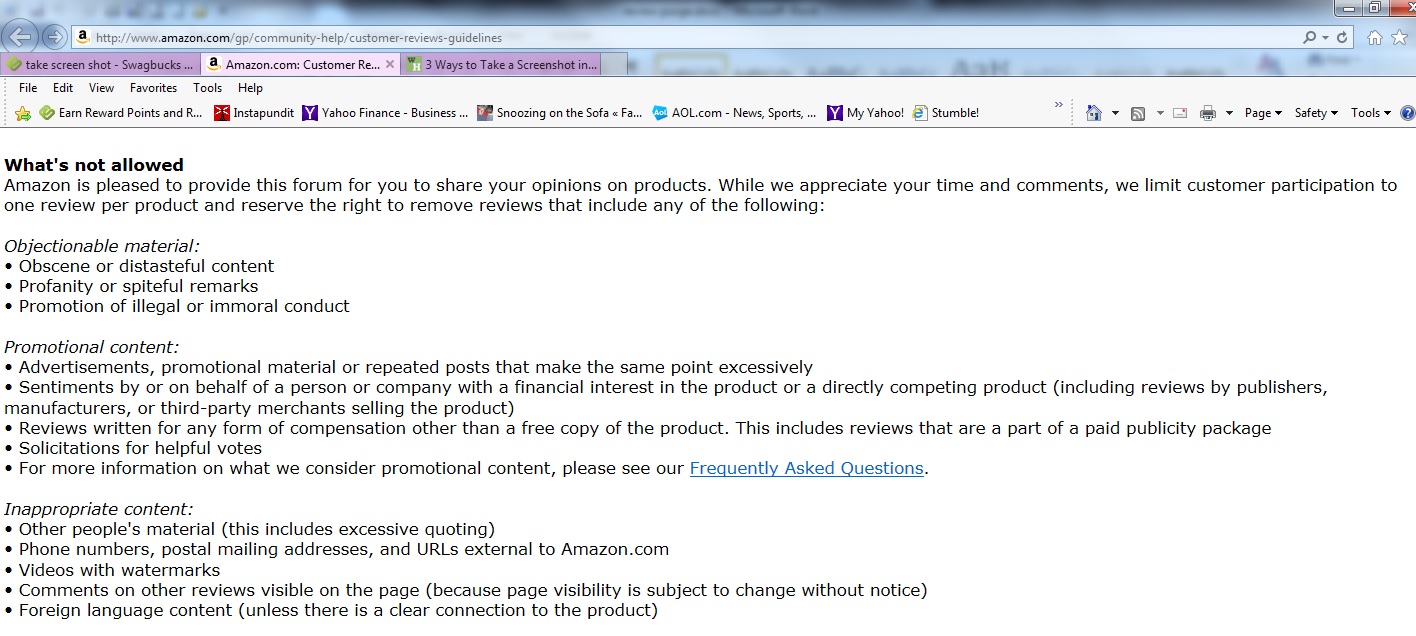
The official rules. Did the review in question violate them?

The official rules. Did the review in question violate them?

I’m disappointed at losing her review, but I am not irate with Amazon. I know they mean well and they can’t investigate every review on its own merits.

I feel as though this was an honest review. The reviewer paid for the book. No review was solicited of her, and she was in no way compensated for it. She has no economic interest in the book. The only connection she has is that she knows the author.

I hope Amazon does not consider proximity to be too much an indicator of fraud. After all, who will the non-famous author market to first, if not his own community. I would discourage family members from reviewing my books, but how far away from me must that line be drawn?
What do you think? Was this a valid review? Should people who know the author be prohibited from reviewing his books? Where should Amazon draw the line?

Selling it by giving it away

The book has been published. All the hard work of editing, proofing, and layout is done. It’s time to take a break, sit back, and relax for a while.

Not.

Anyway, I can take a break from the completed book and turn my attention to my work in progress. Well . . . actually . . . I can’t do that either. The work in progress may have to stay on hold for a while longer.

A Housefly in Autumn may be published, but I’m hardly done with it. There’s promoting to be done.

Promoting can be a hard pill to swallow for someone who revels in the introverted nature of writing. Fortunately, this is not my first trip through the cycle, so I am somewhat prepared to face it. I’m never wholly prepared for promotion, but somewhat prepared is better than not prepared at all.

Promotion can be a slap in the face to the first-time author. It is tempting to think that once a book is released, people will naturally buy it. After three books, I am fully cured of this temptation.

I know how difficult it is to sell a book. That’s why I’m working so hard to give them away.

It may sound counter-productive to give books away, and maybe it is. There’s no guarantee it will result in eventual sales, but the idea is that people who might not have bought the book will be attracted to the giveaway. If they enjoy it, they may review it or tell their friends, or otherwise increase visibility, eventually making the book attractive enough to be worth actual money to the reading public.

Book giveaway

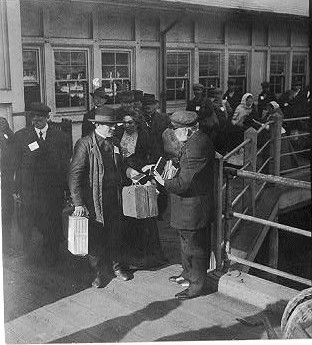
If not for the Internet, I’d be handing them out to passersby down at the docks.

The giveaways I’m working on right now are at Goodreads, for the print copy, and Amazon, for the Kindle version.

The Goodreads giveaway is running now. I am giving away six print copies of A Housefly in Autumn. The giveaway is open to US readers and runs through July 26, 2015, when six winners will be chosen.

The Kindle giveaway will run July 15-17. This is an unlimited giveaway. The Kindle version will be free to all who wish to download during that time. Amazon is in charge of the logistics, but from my experience, I expect this to be open to international readers as well.

Setting up the giveaways is not difficult nor time-consuming. But if you’re giving away your book, you want somebody to take it (if only for self-esteem purposes). The more difficult piece is drawing attention to your giveaway. This involves researching and registering your giveaway on blogs and web sites that advertise such things. All have different rules and requirements. Figuring out where to post and filling in required fields eats up time. Fortunately, it doesn’t have to eat up a lot of money, because it’s hard enough to give so much of your toil away; it would be far worse to have to pay to give it away.

Please take a moment to explore these giveaways and/or mention them to other readers.